Greek octopus
Do you want to make something a little different for dinner, whilst at the same time discovering the loveliest flavours of traditional Mediterranean cuisine? Shall we linger in one of the most beautiful countries in this part of the world, rich in culinary heritage, respected for their unique ability to combine healthy and tasty ingredients, to live with that extra touch of spirit? Our culinary adventure today takes us on a little holiday to the magic of Greece where we discover a special dish of Greek octopus, perfect to tease and tempt your guests’ palates, taking them with you on a trip to the shores of the most beautiful Greek islands where the sea meets the earth. Make sure to pay a visit to your trusted fishmonger and ask him if he has any top quality octopus: if so, take it home and cook it following our recipe. Enjoy this unique dish!
Ingredients
Octopus and Tomato: A Meeting of Flavors
Greek-style octopus takes on a vibrant red hue with Apulian tomato puree, an ingredient that radiates freshness and intensity. When prepared with care, this recipe highlights the tenderness of the mollusk, while the puree, made from sun-ripened tomatoes, enriches the dish with an authentic and lively note.
* approximate values per serving
Preparation
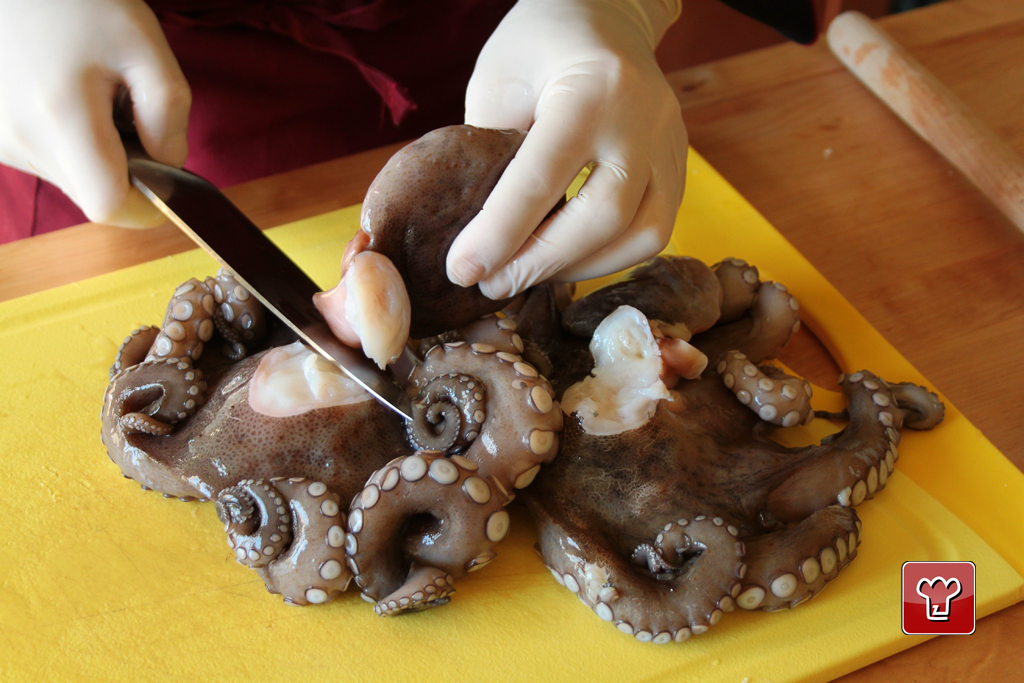
Clean the octopus. Beat it with a wooden mallet so as to tenderise. Cut it into roughly 2cm pieces. Then cut the carrot and onion into slices. Fry the carrot and the onion in a little oil. Add the octopus and sauté for a few minutes. Add the tomato passata, and then the spices and stir. Add a little water and bring to the boil. Then add some dry oregano and chopped parsley and simmer for about an hour. Serve alongside some boiled potatoes cut into slices.
Step by step
|
View the step by step
|
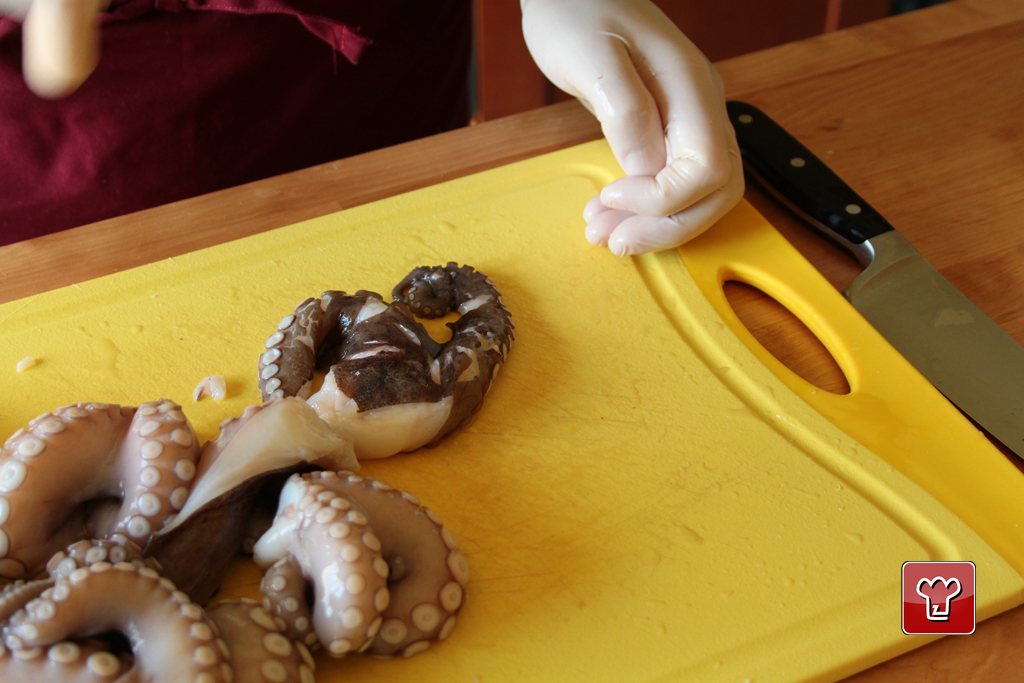
Cut off the head and separate the tentacles
|
|
View the step by step
|
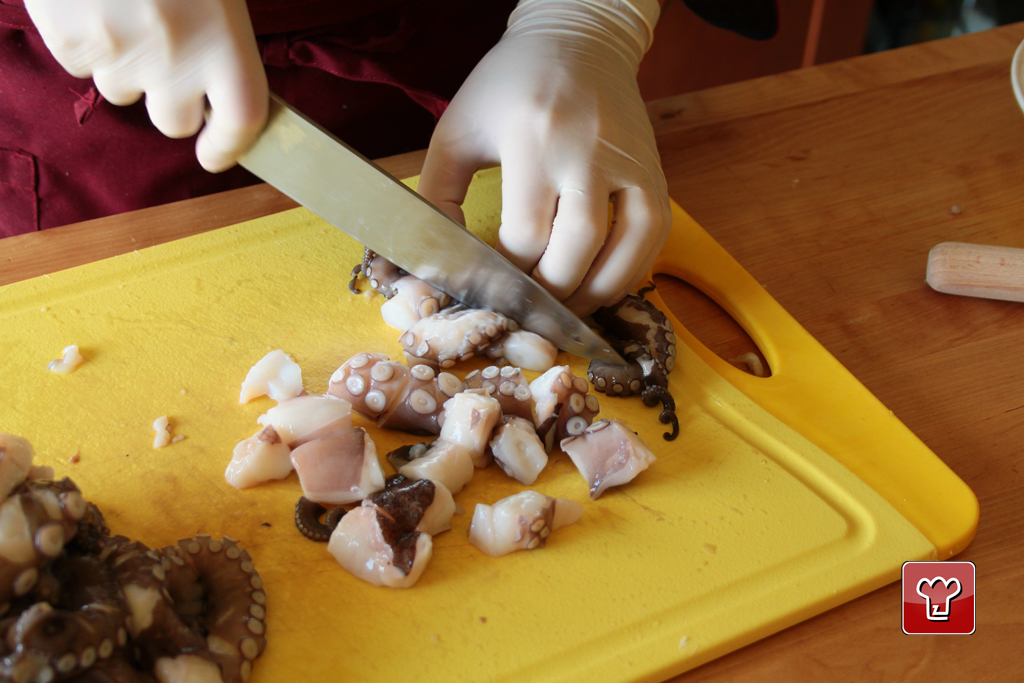
Cut the octopus into 2cm pieces
|
|
View the step by step
|
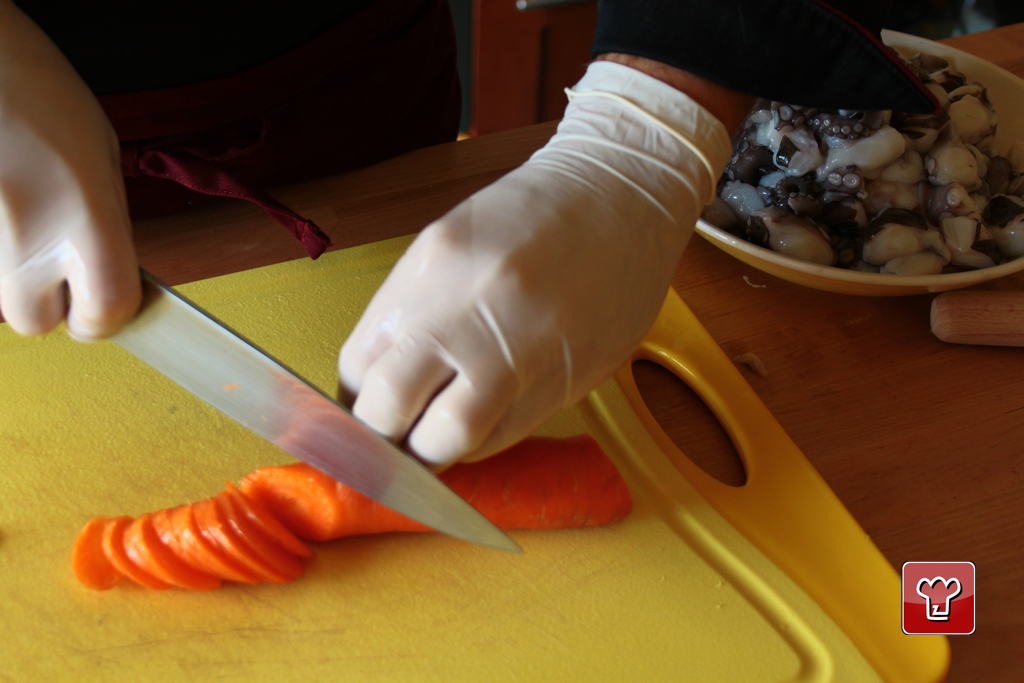
Cut the carrot into not-too-thin diagonal slices, so that they are suitable for long cooking
|
|
View the step by step
|
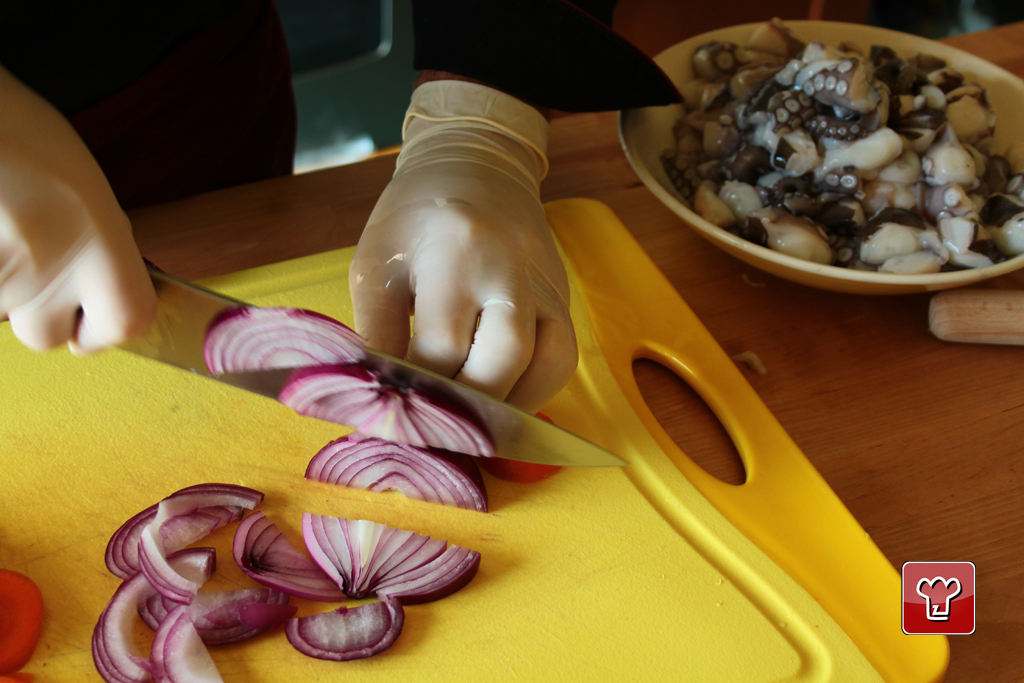
Cut the onion into thick slices
|
|
View the step by step
|
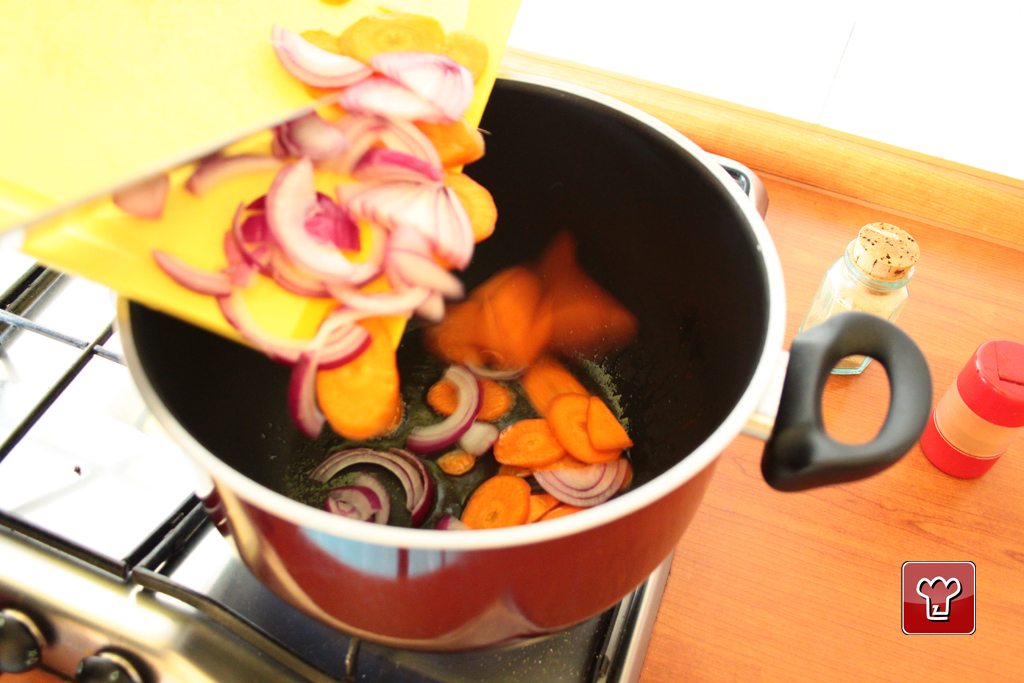
Cook the sliced vegetables in a saucepan with a little olive oil
|
|
View the step by step
|
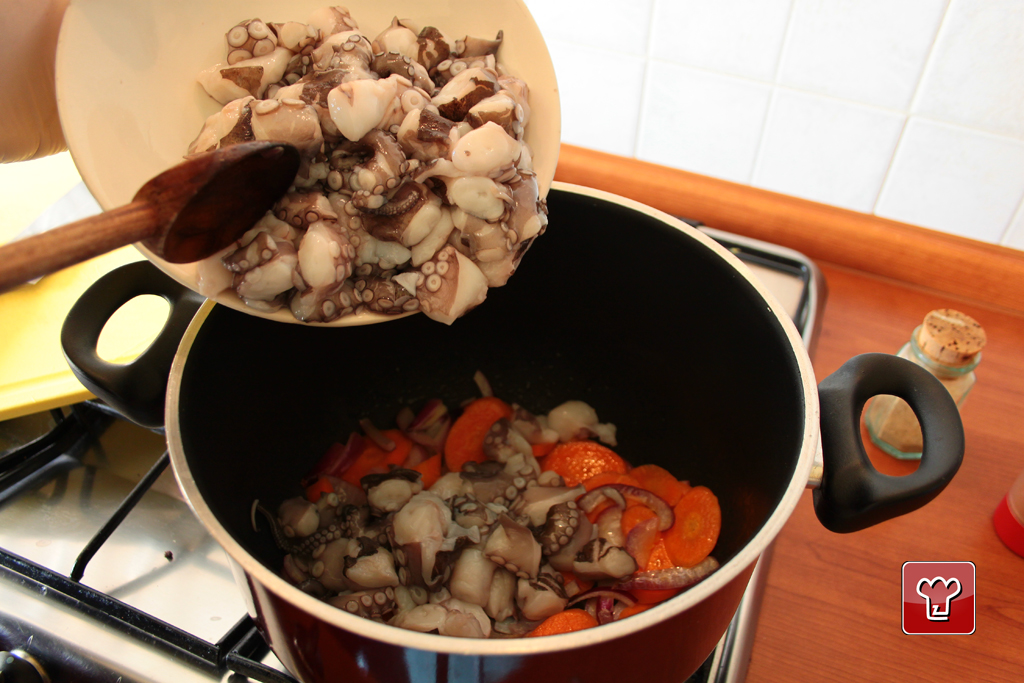
After a few minutes, add the octopus to the vegetables
|
|
View the step by step
|
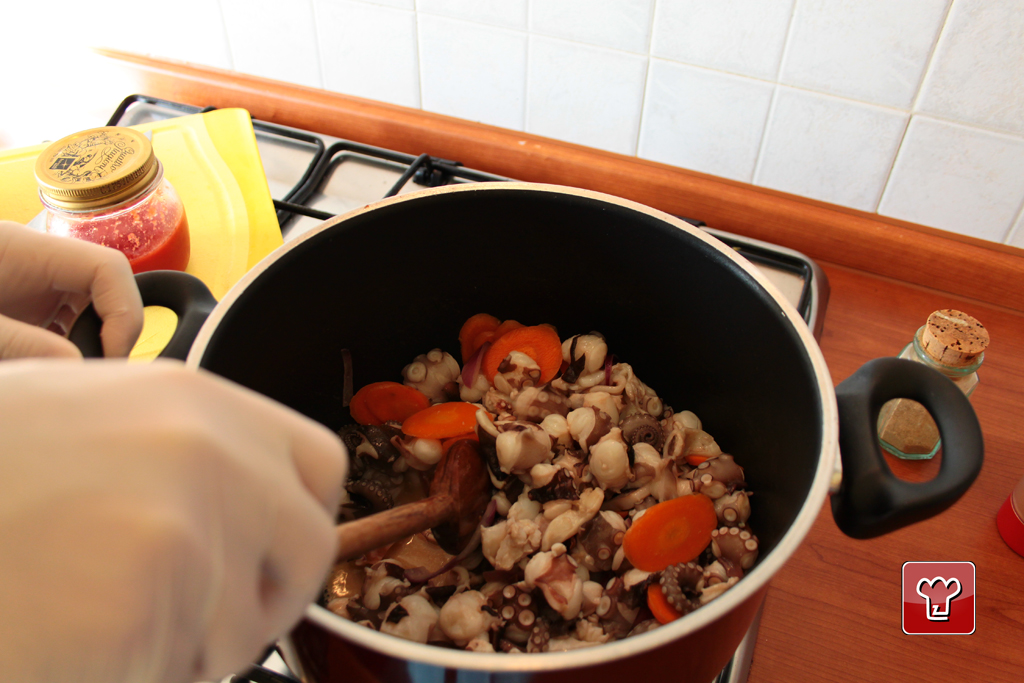
Cook until the octopus starts to lose some of its moisture
|
|
View the step by step
|
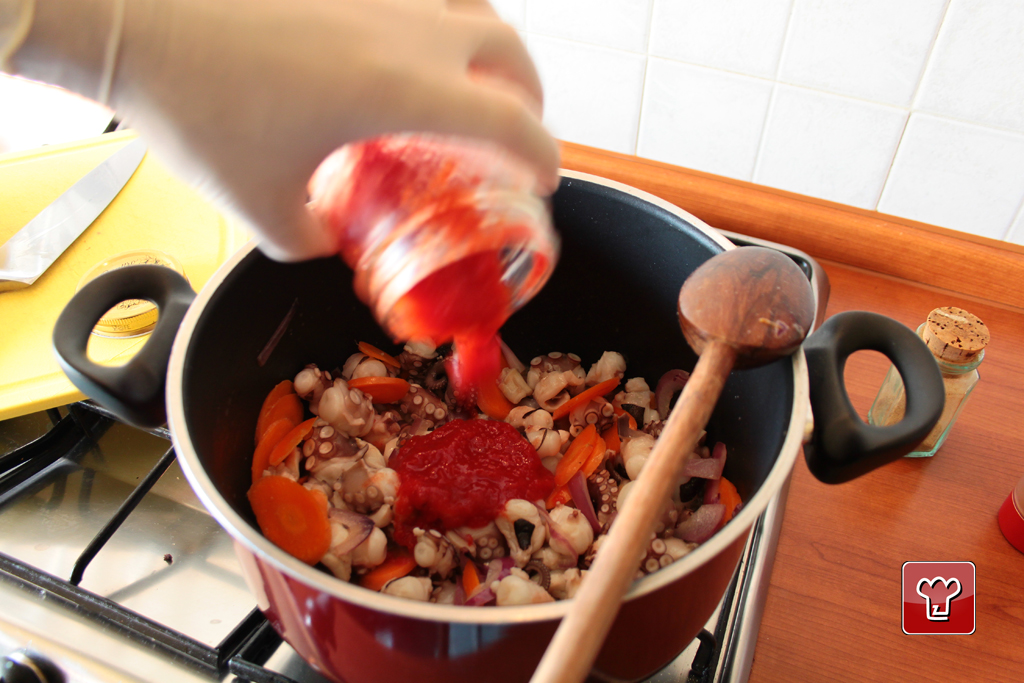
Add the tomato passata and mix well
|
|
View the step by step
|
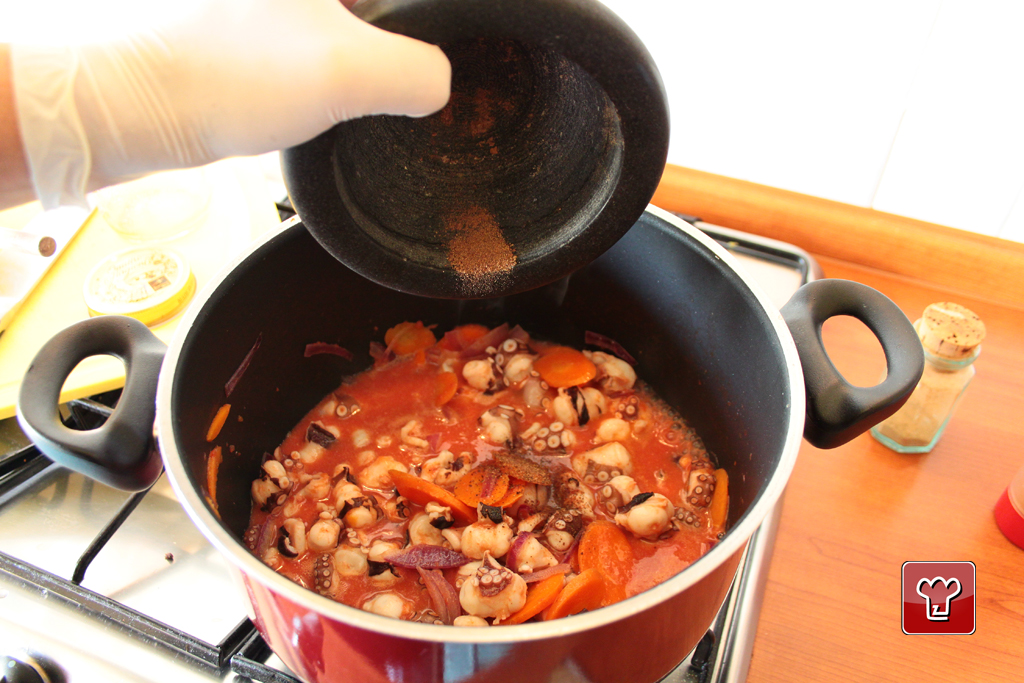
Add the herbs and spices to give the Greek flavour
|
|
View the step by step
|
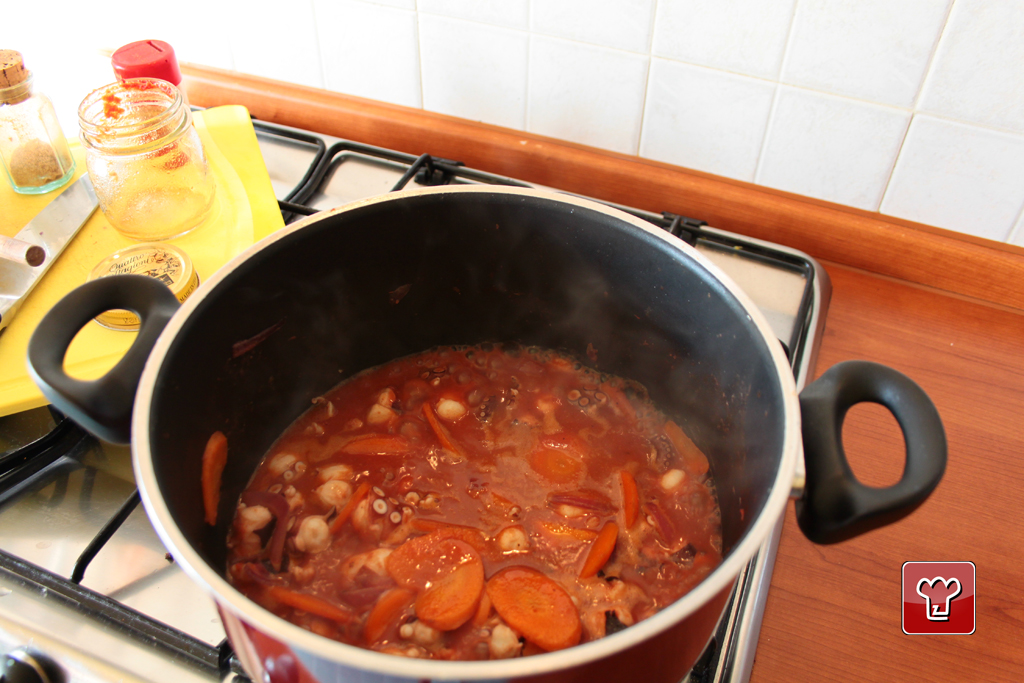
Simmer the octopus in the sauce, adding water as needed, in a covered pan on a low flame
|
|
View the step by step
|
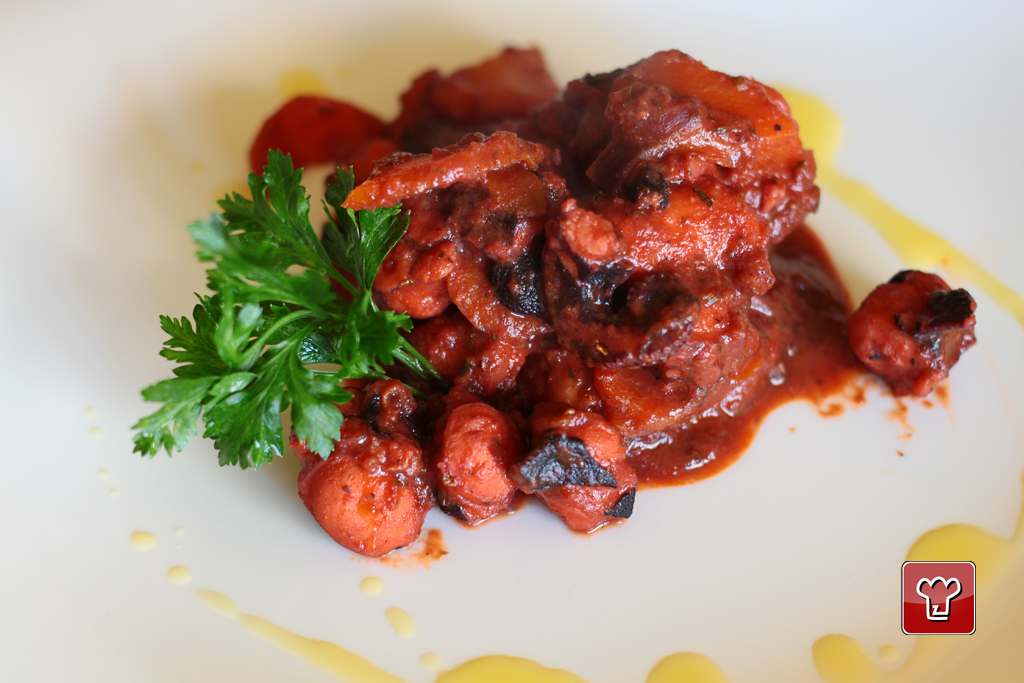
The octopus is ready! The taste of Greece in one dish!
|
Additional information
Greek Octopus with Carrots and Onions
One of the tastiest variations of Greek octopus is certainly the addition of carrots and onions, which enrich the dish with flavors and colors. To prepare this recipe, after cleaning and tenderizing the octopus, it is cut into pieces of about 2 cm. The carrots and onions are thinly sliced and sautéed in a drizzle of oil, creating a perfect aromatic base. Once the octopus is added, everything is sautéed before adding the tomato puree, creating a thick and flavorful sauce. This preparation is ideal for those who love dishes rich in vegetables and Mediterranean flavors, making the Greek octopus even more complete and nutritious.
Stewed Greek Octopus
The Greek octopus can also be prepared in a stewed version, a cooking technique that enhances the flavor of the mollusk. In this variant, it begins with a sauté of onion and carrot, but more water is added to create a flavorful broth. The octopus is cooked slowly, allowing the flavors to meld and the meat to become tender. This cooking method is typical of Greek tradition, where dishes are often cooked slowly, enhancing the aromatic notes of the spices and fresh ingredients. Served with crunchy bread, the stewed octopus represents an ideal dish for a family dinner or with friends.
Light Greek Octopus without Tomato Puree
For those looking for a lighter version of Greek octopus, it can be prepared without tomato puree. In this recipe, the octopus is cooked with a sauté of carrots and onions, but only a drizzle of oil and spices like oregano and pepper are used for flavoring. Additionally, one can opt for steaming or pressure cooking, which preserves the nutritional properties of the mollusk and reduces caloric intake. This variant is perfect for those following a healthy diet and wanting to enjoy a flavorful dish without feeling heavy.
Benefits of Octopus: Nutrients and Calories
Octopus is a food rich in nutrients and health benefits. It is an excellent source of protein, with a relatively low caloric content, around 100 calories per 100 grams. This mollusk is also rich in minerals such as iron, calcium, and potassium, essential for the proper functioning of the body. Furthermore, octopus contains omega-3 fatty acids, which contribute to heart and circulatory system health. Incorporating octopus into one’s diet can be a great choice for those looking to maintain a balanced and healthy diet while enjoying a flavorful dish.
Can Greek Octopus be Frozen?
The answer is yes, Greek octopus can be frozen without any problems. It is advisable to do so immediately after preparation, allowing the dish to cool completely before transferring it to an airtight container. This way, the flavors and texture of the mollusk are preserved. When wishing to consume the frozen octopus, it is important to thaw it in the refrigerator for a few hours or overnight. It can then be gently reheated in a pan to bring it back to the right temperature. This practice allows for always having a ready-to-eat dish on hand, saving time while keeping the nutrients intact.