Baklava
Any of you who have had the opportunity to travel in Eastern Europe or the Middle East will certainly be familiar with the recipe we’re making today: it is a sweet pastry as old as the world, and equally well-known. It’s baklava, a pastry made from filo pastry and nuts. As we said, it is particularly common throughout Central Asia, Iran, the Arab countries, Israel, Iran and the Balkan Peninsula including Greece, and is especially popular in Turkey. To make this pastry, which is rather complicated, you'll have to buy sheets of filo pastry and then add hazelnuts, almonds, pistachios, honey, sugar, lemon, cinnamon and more. Following our chef’s recipe you will be able to bring home a taste of the Middle East. Have you got the ingredients ready to make Baklava with us?
Ingredients
* approximate values per serving
Preparation
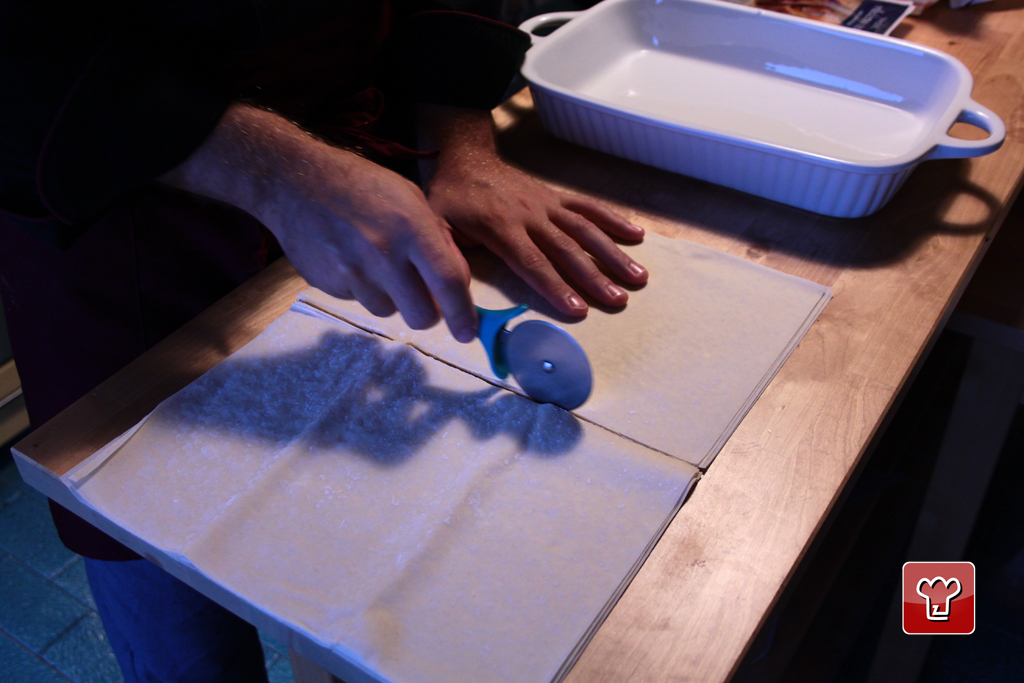
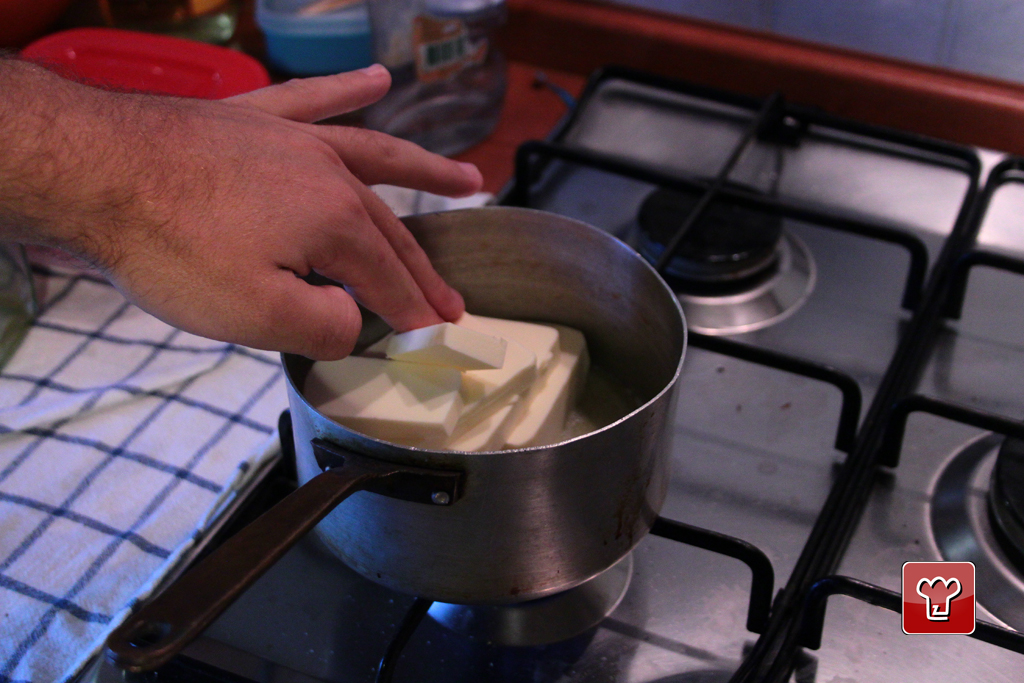
Melt the butter in a small pan. Coarsely chop the nuts by hand or in a blender and then mix in the grated zest of one lemon and the cinnamon. Now layer the dessert. Start by ensuring that each sheet of filo pastry is brushed with melted butter. Put 3 sheets of filo pastry on the bottom of a greased baking tin, then add a thin layer of chopped nuts, a layer of filo pastry, then a thick layer of chopped nuts, another layer of filo pastry, a thin layer of chopped nuts and 7 layers of filo pastry. Then cut into squares and then into triangles (see photos). Bake for 30 minutes at 180°C. While the cake is baking, prepare a syrup with water, sugar and honey. Bring it to the boil, and let it simmer for 10 minutes. When the pastry is cooked, take it from the oven and immediately pour all the syrup into the baking tray, flooding the cake while it is still boiling! Wait for it to cool completely and serve with a glass of water.
Step by step
|
View the step by step
|
Melt the butter in a saucepan
|
|
View the step by step
|
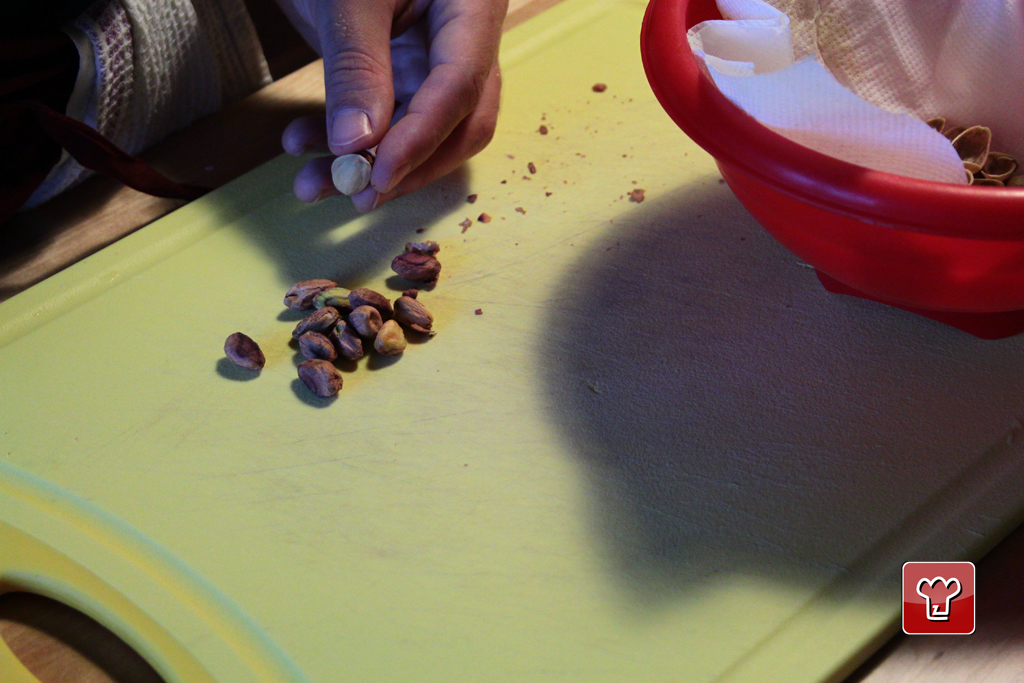
Shell and peel the pistachios
|
|
View the step by step
|
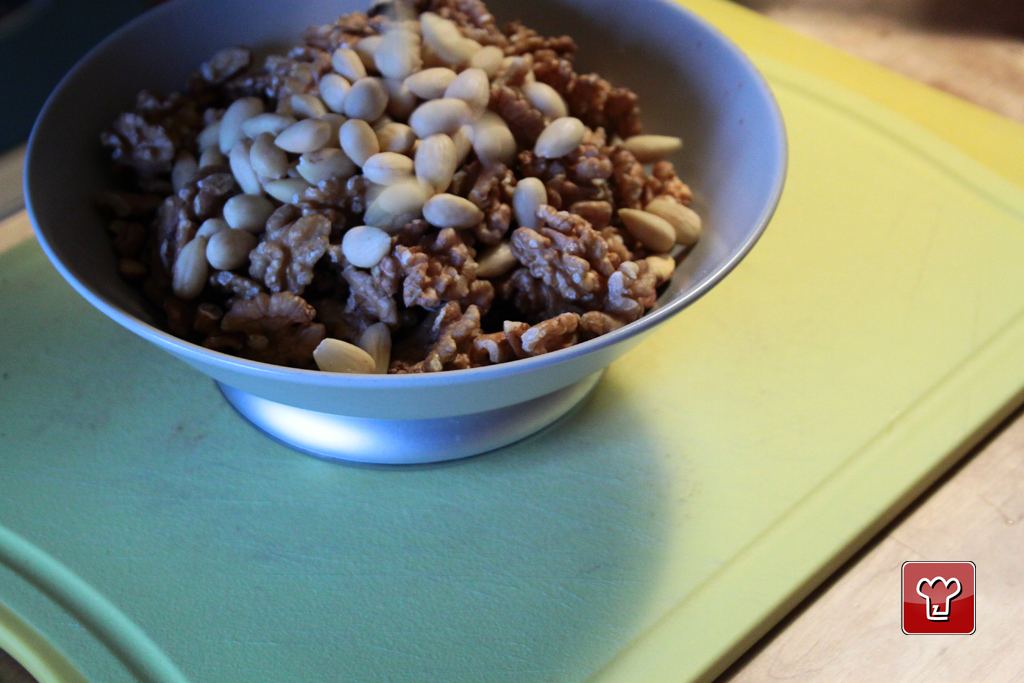
Add the pistachios
|
|
View the step by step
|
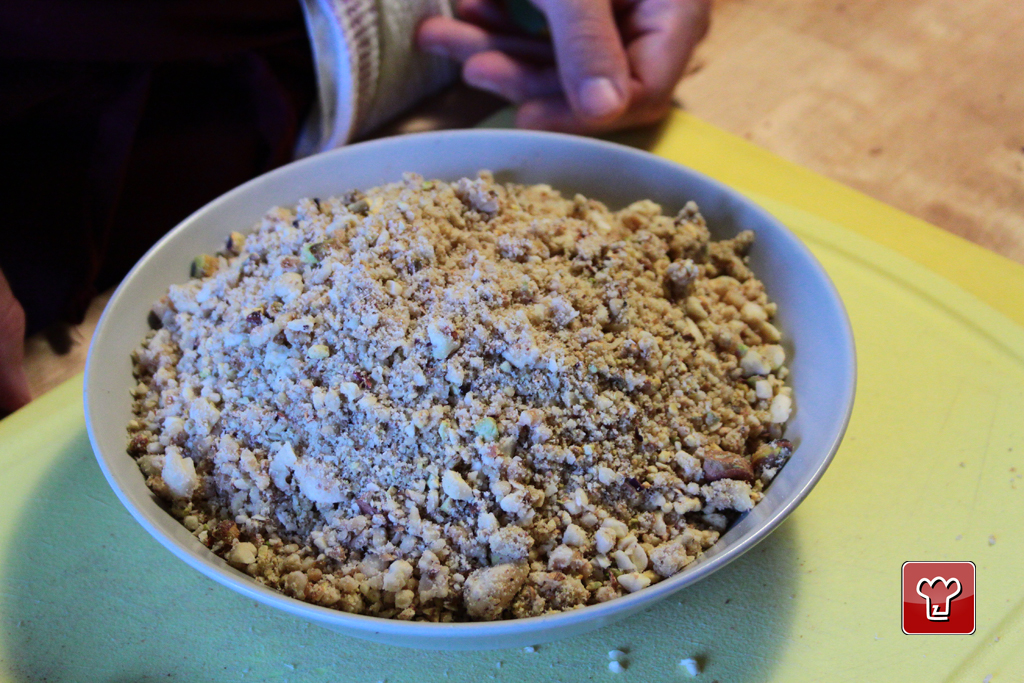
Chop the nuts with a knife or in a blender
|
|
View the step by step
|
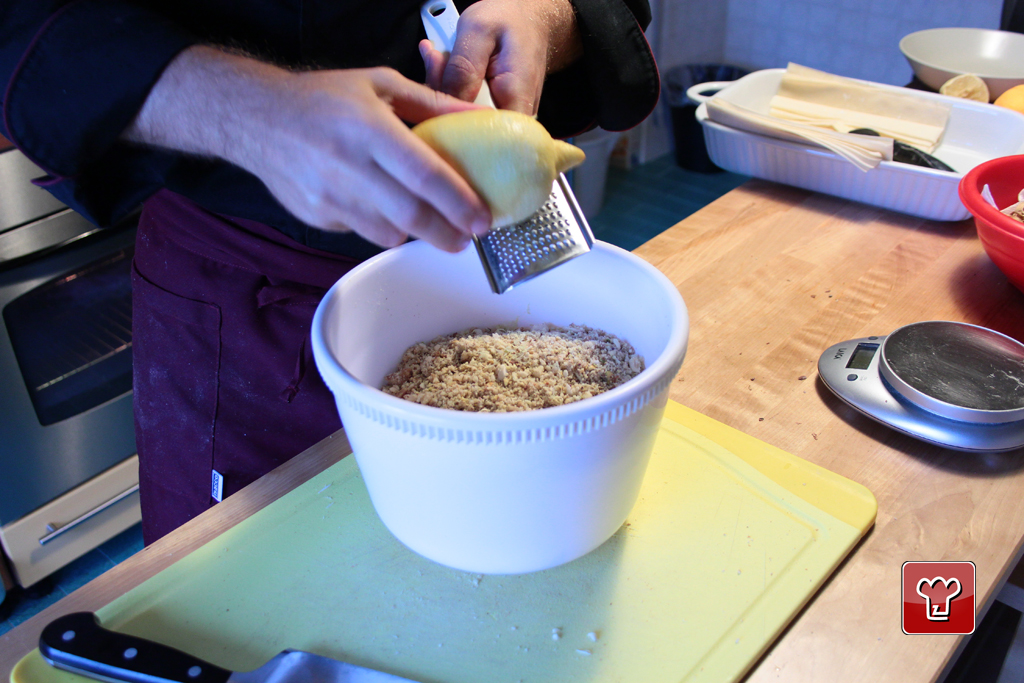
Grate the lemon zest and mix with the nuts
|
|
View the step by step
|
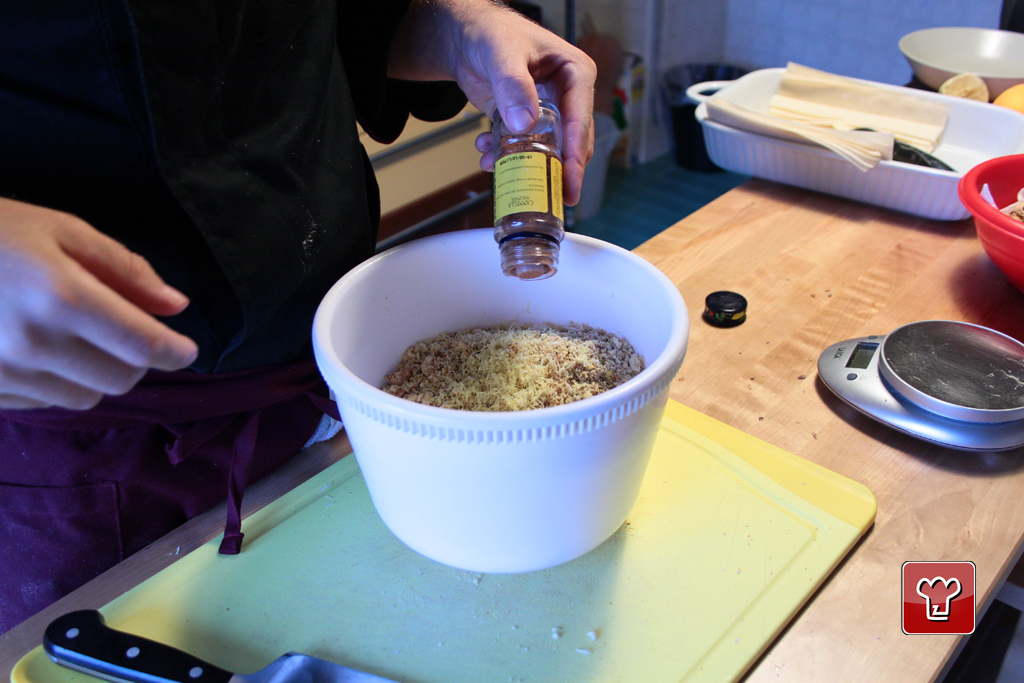
Add a teaspoon of cinnamon to the nut mixture
|
|
View the step by step
|
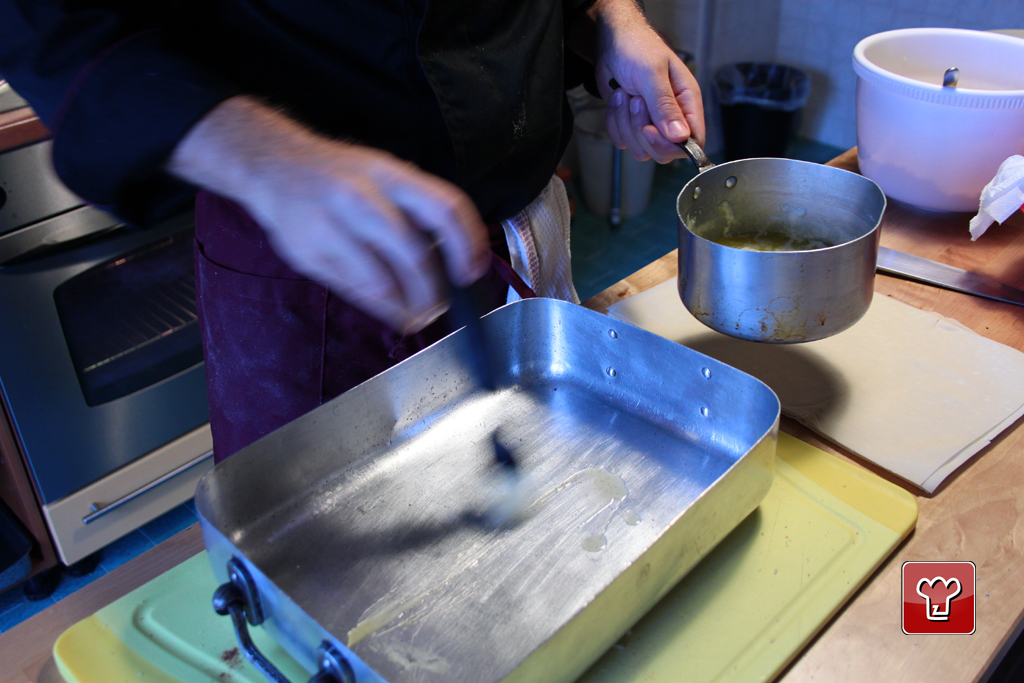
Butter generously a baking tin in which you will layer the baklava
|
|
View the step by step
|
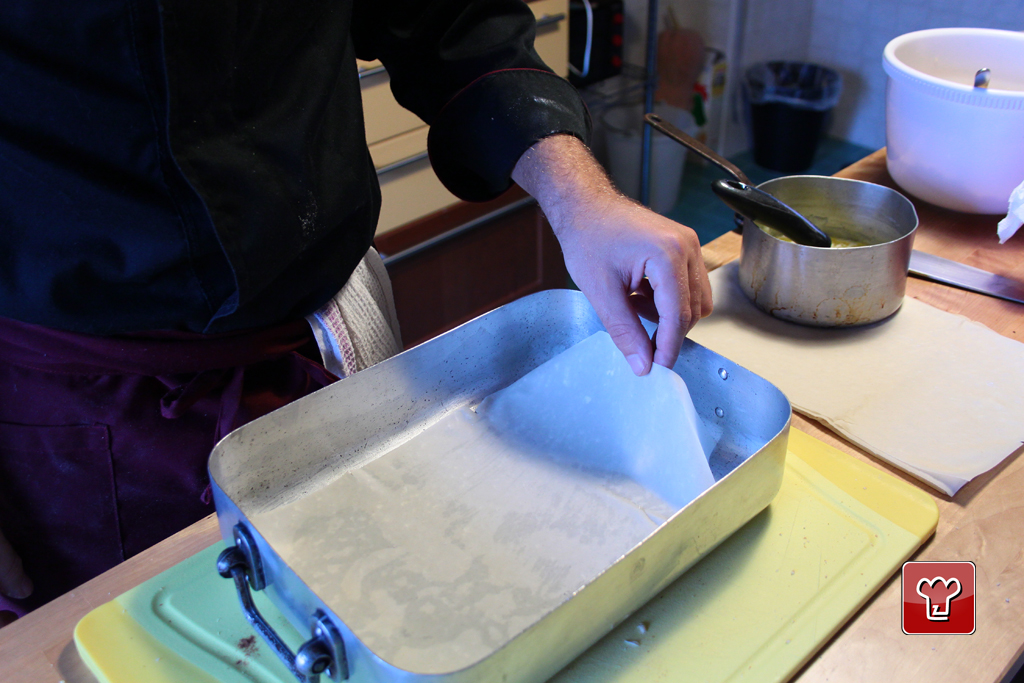
Brush the first sheet of filo pastry with melted butter and lay it out on the base of the baking tray
|
|
View the step by step
|
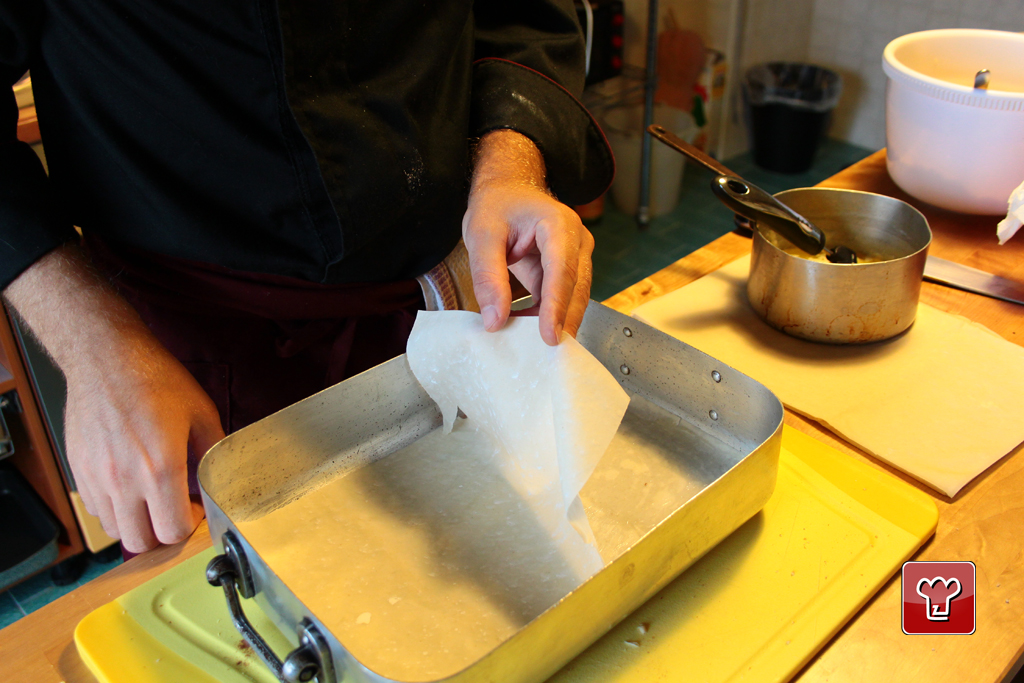
Brush another two sheets of pastry with butter and lay out on the base
|
|
View the step by step
|
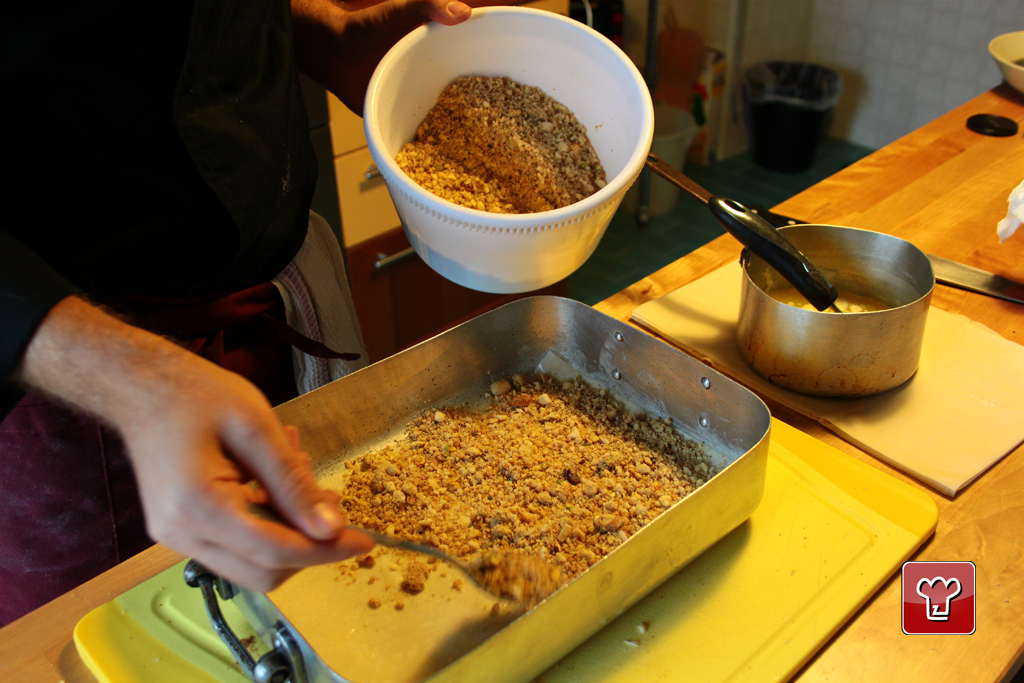
Spread a layer of mixed nuts on the pastry base
|
|
View the step by step
|
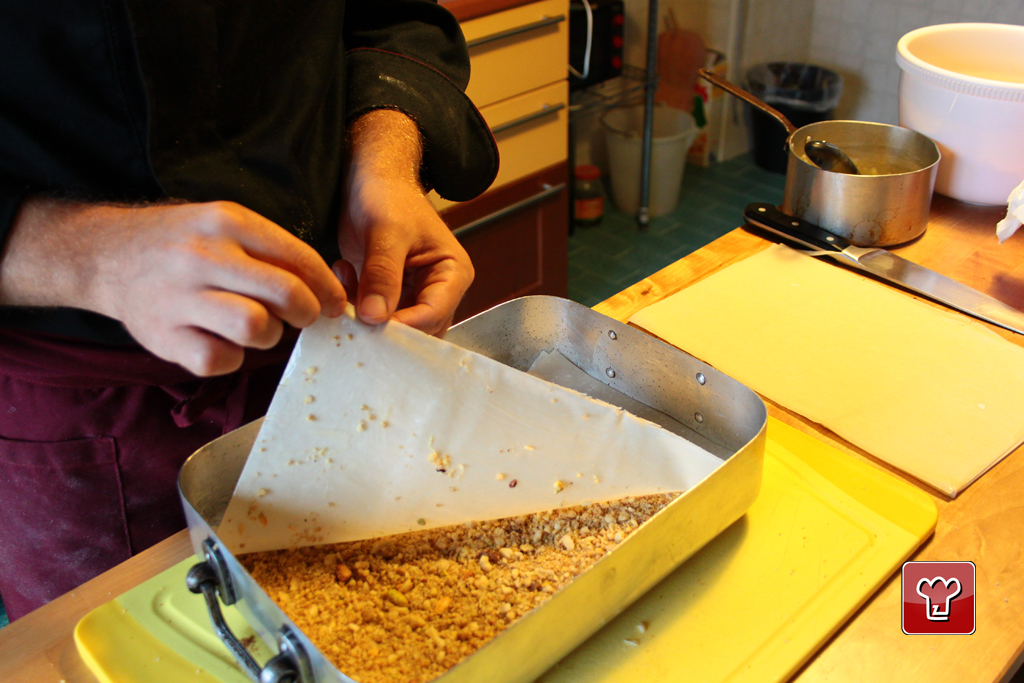
Butter another pastry sheet and place on top of the first layer of nuts
|
|
View the step by step
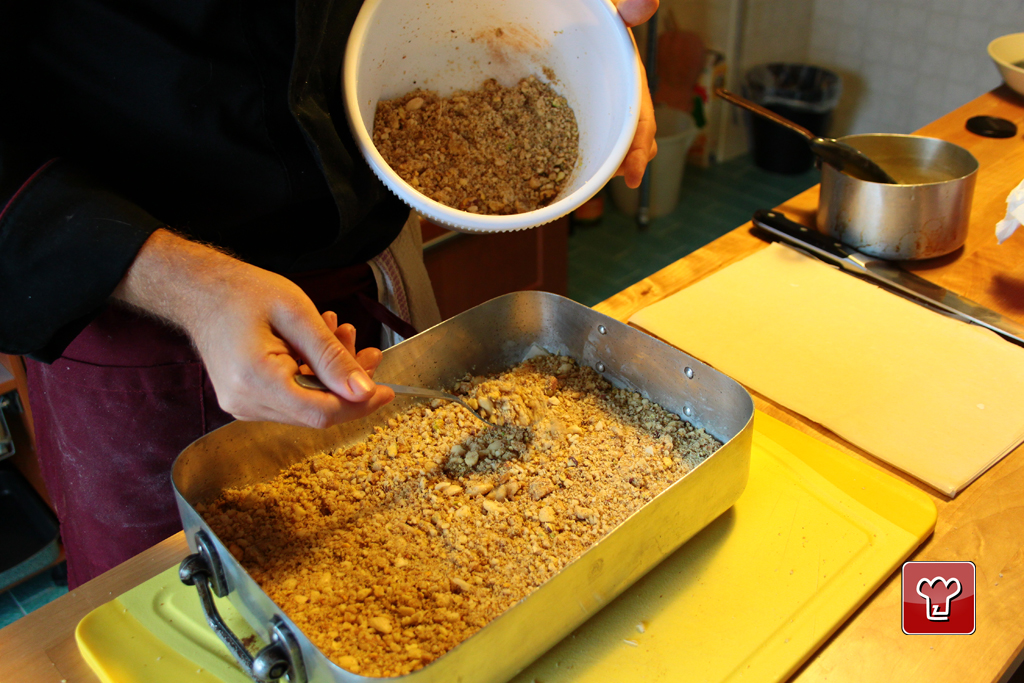
|
Spread out the second thin layer of mixed nuts on the pastry dividing it from the first
|
|
View the step by step
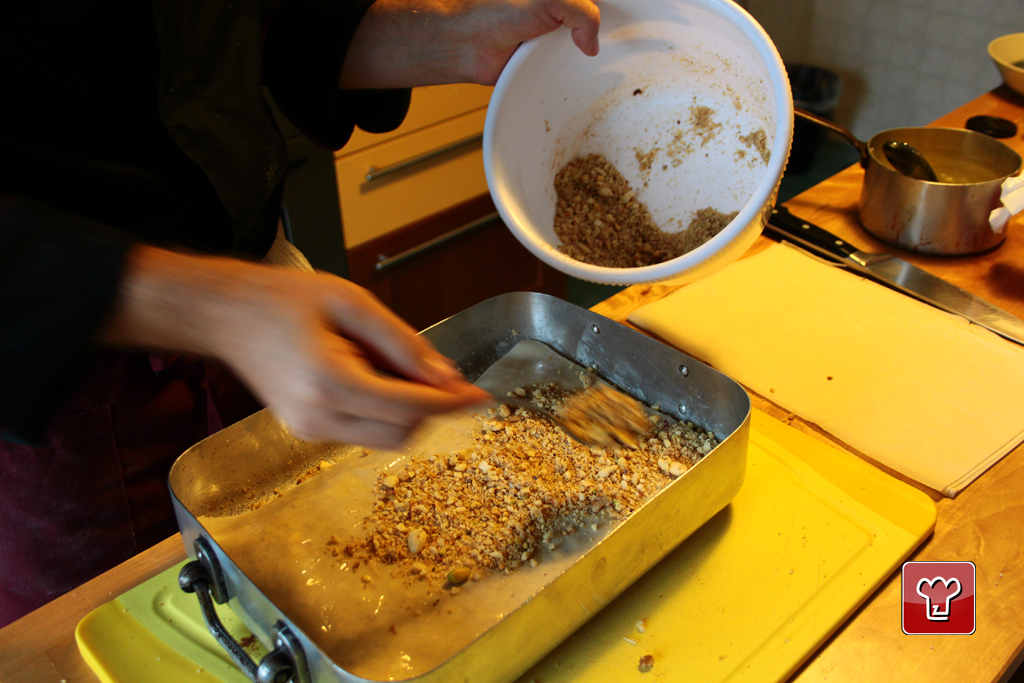
|
Butter and lay out another sheet of filo pastry and spread the third and final layer of mixed nuts
|
|
View the step by step
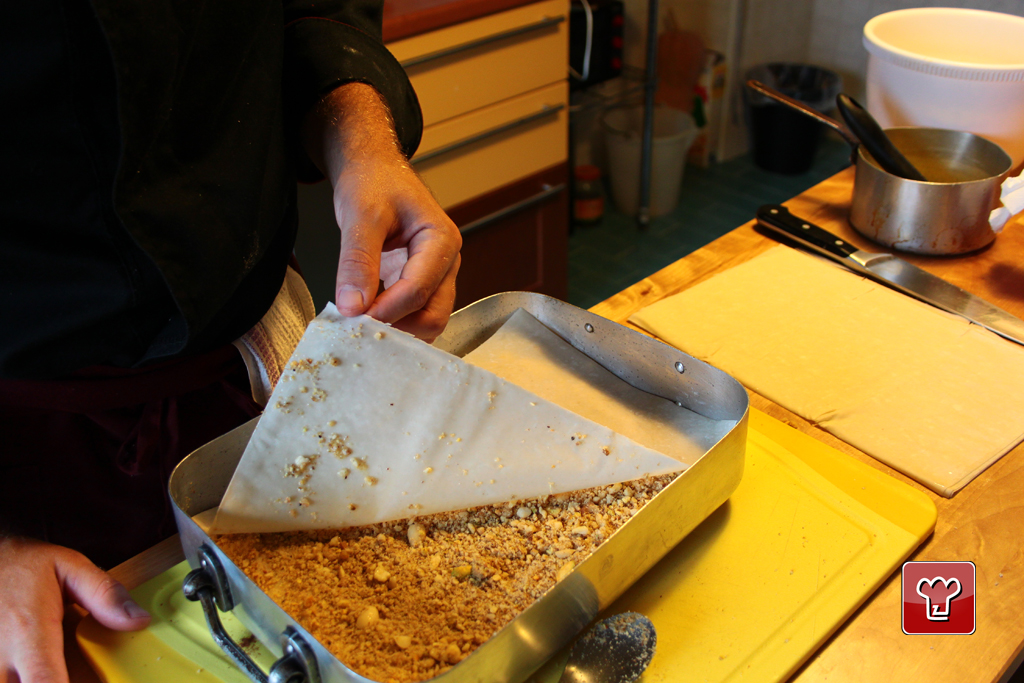
|
Top the baklava with 7 sheets of well-buttered filo pastry
|
|
View the step by step
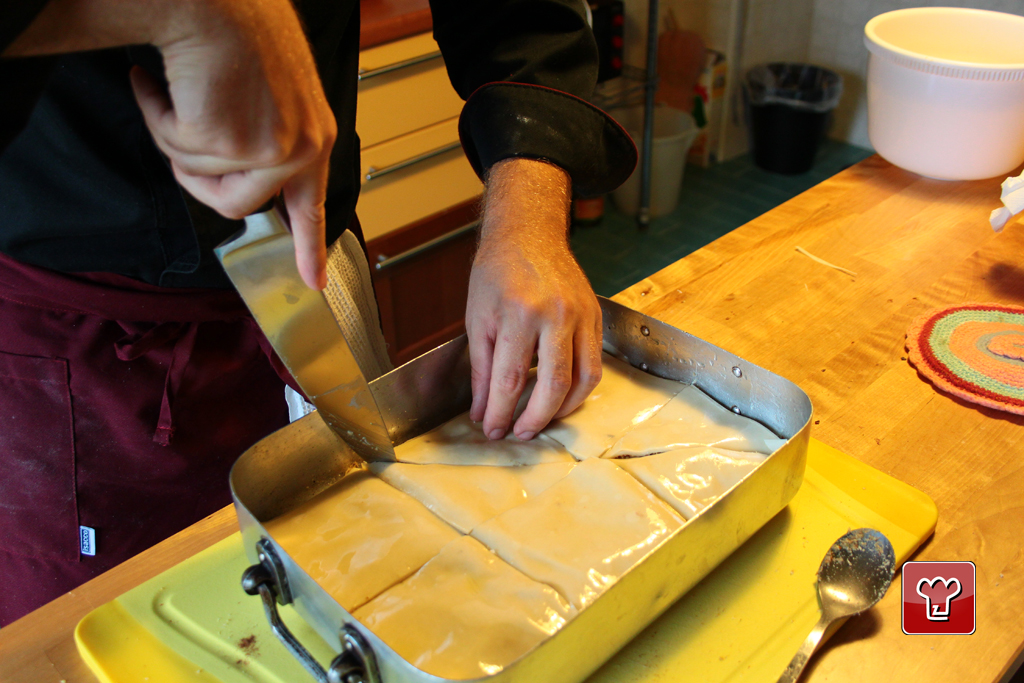
|
Cut the baklava into squares and then triangles while it is still in the tin, then bake at 180°C for 30 minutes
|
|
View the step by step
|
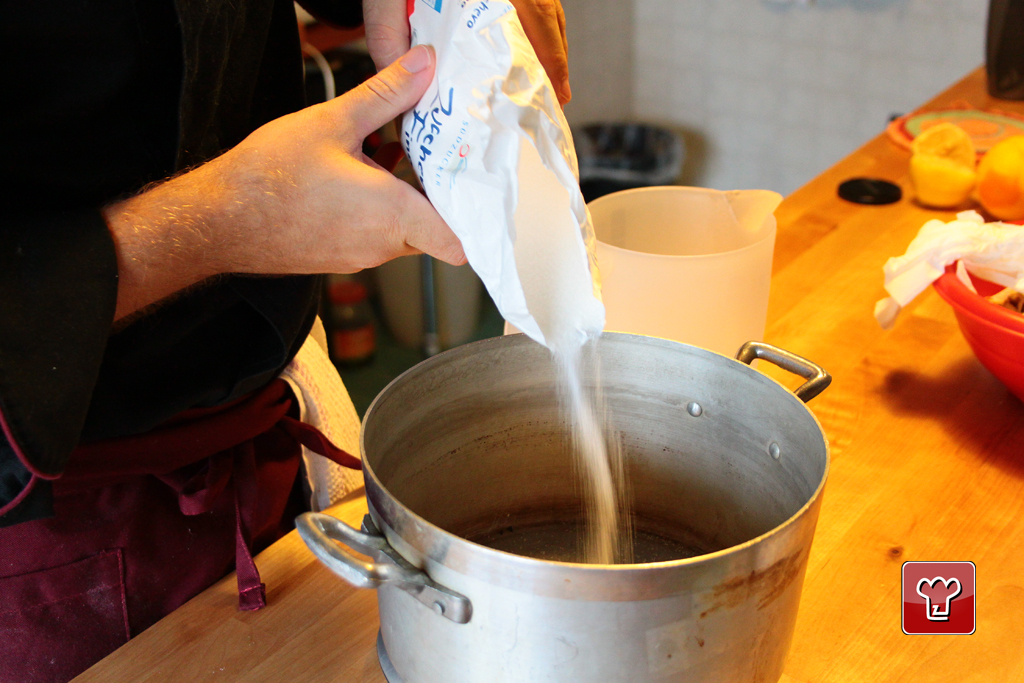
While the baklava is cooking, prepare a solution of sugar, honey and water and bring to the boil
|
|
View the step by step
|
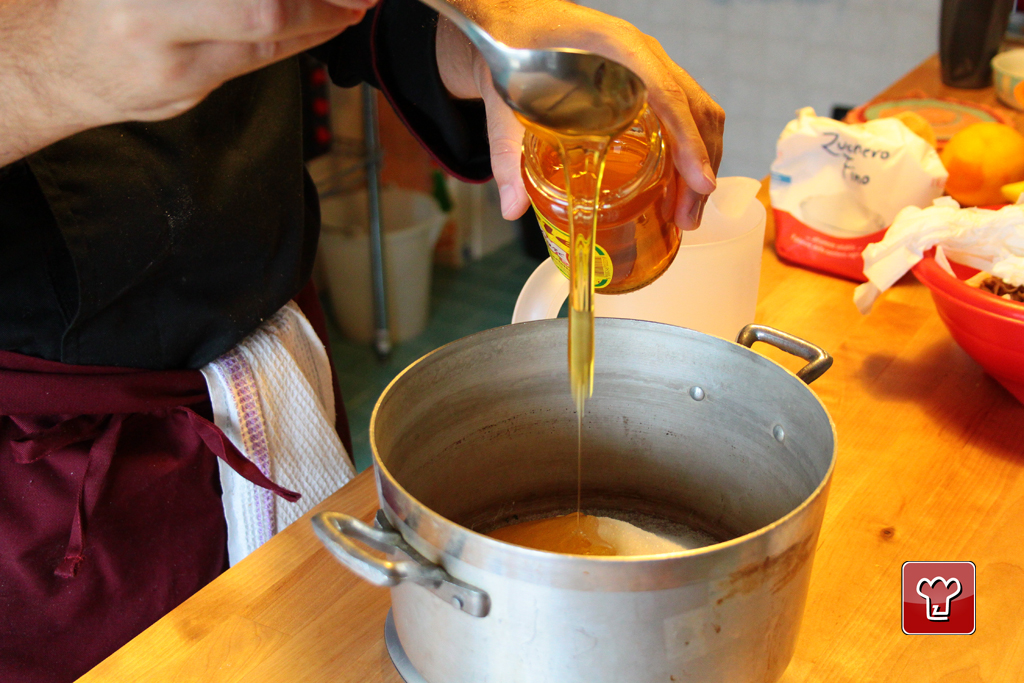
While the baklava is cooking, prepare a solution of sugar, honey and water and bring to the boil
|
|
View the step by step
|
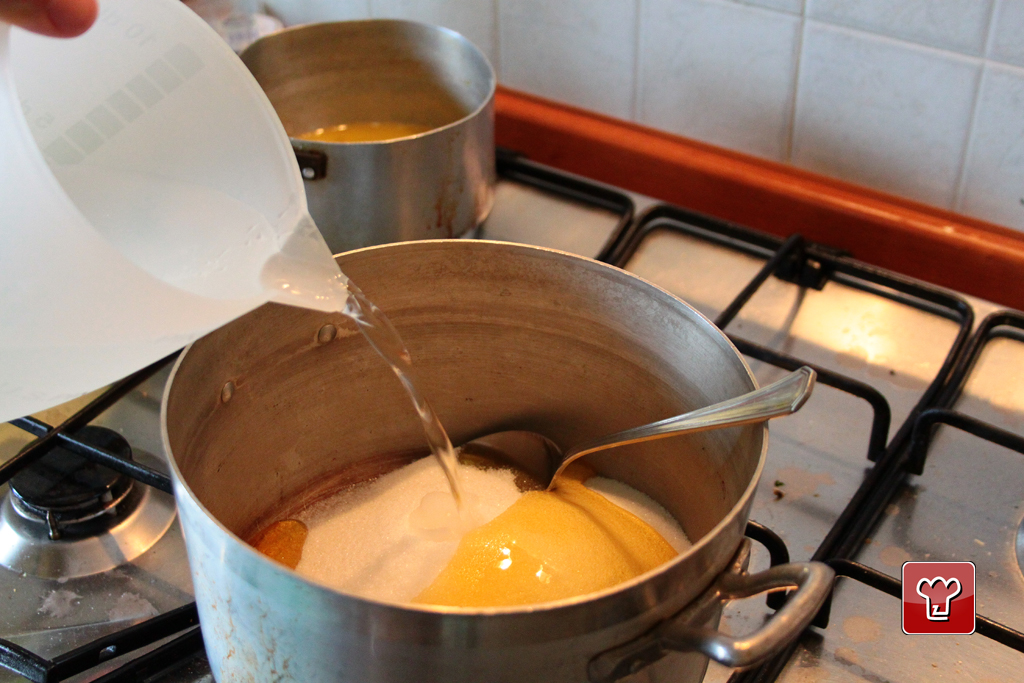
While the baklava is cooking, prepare a solution of sugar, honey and water and bring to the boil
|
|
View the step by step
|
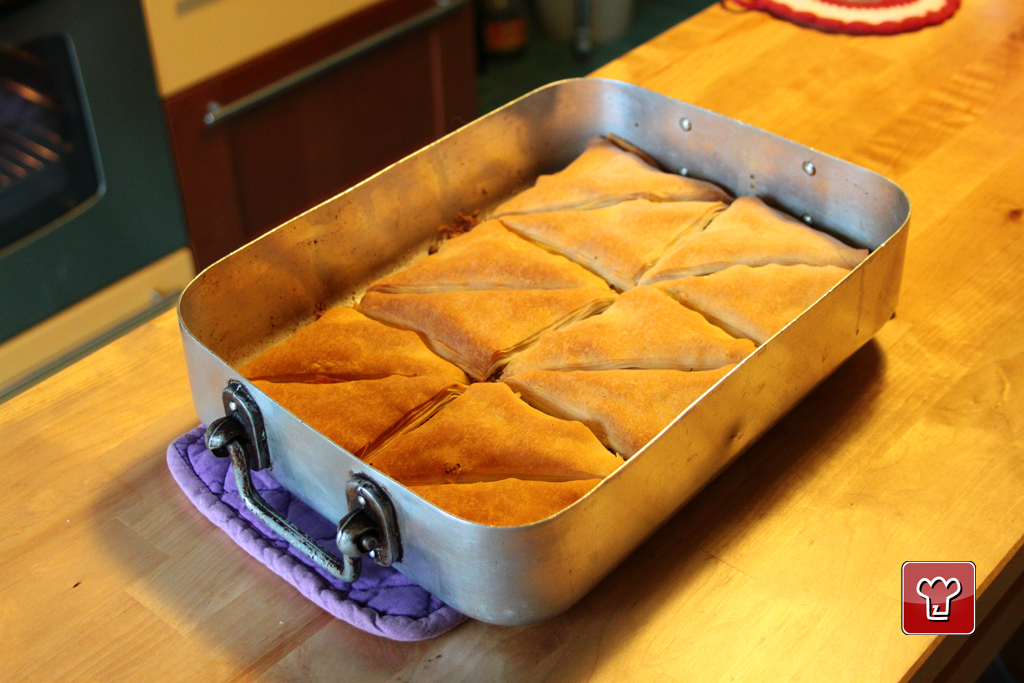
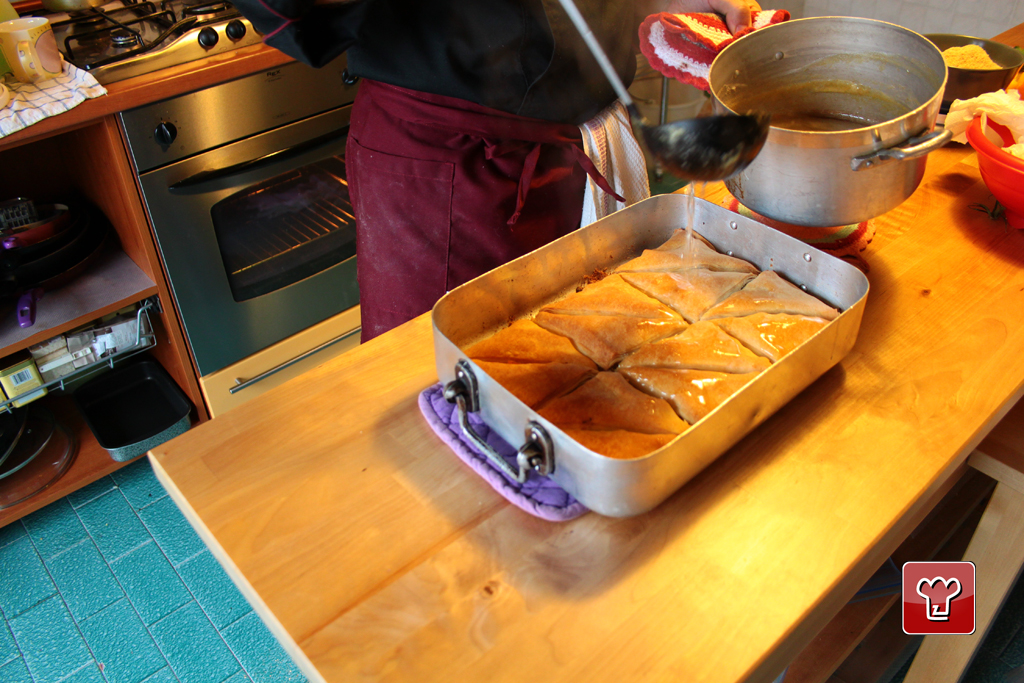
Here is the baklava just removed from the oven. The filo pastry will be hot and crispy
|
|
View the step by step
|
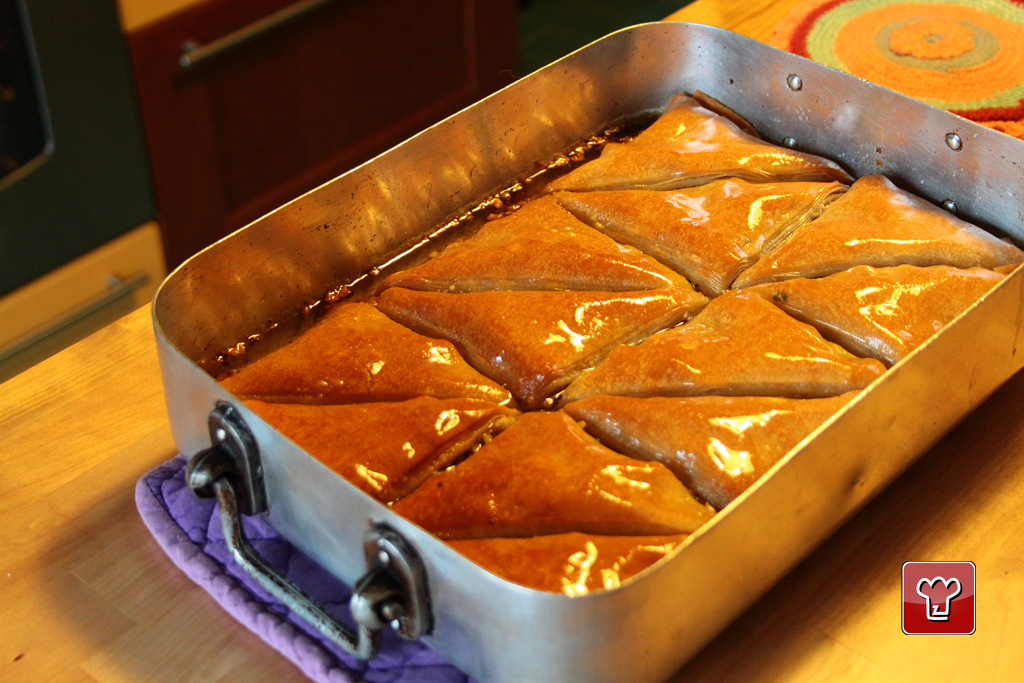
While the baklava is still hot, drench it with the hot syrup
|
|
View the step by step
|
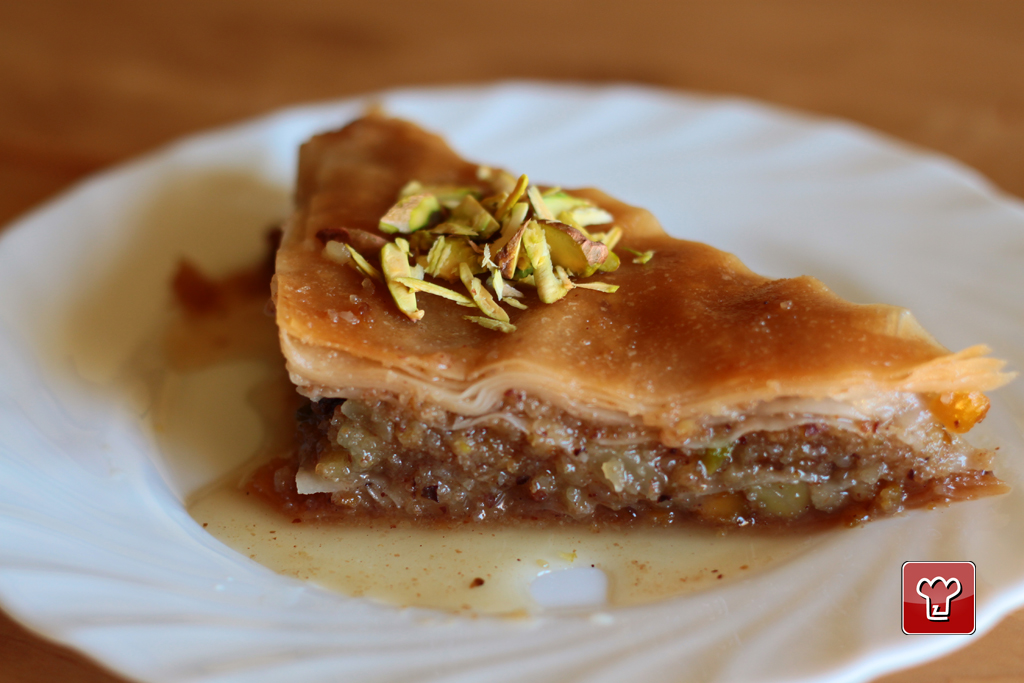
Once the baklava is submerged in the syrup solution, leave it to cool
|
|
View the step by step
|
The baklava is ready, a specialty of Turkey, and widespread in all the Balkan countries up to Slovenia. Serve with a glass of fresh water.
|
Additional information
Baklava with mixed dried fruit
One of the most delicious variations of traditional Baklava is certainly the one that uses a combination of dried fruits, such as almonds, walnuts, and pistachios. This preparation enhances the flavors and textures of each ingredient, creating a rich and crunchy dessert. To make it, start by melting the butter and mixing the chopped dried fruit with grated lemon zest and a pinch of cinnamon. Alternate layers of buttered phyllo pastry and dried fruit, ensuring a perfect balance between sweetness and savoriness. The final result will be a Baklava that not only satisfies the palate but also offers a variety of nutrients thanks to the dried fruit, making every bite a true delight.
Turkish Baklava with phyllo pastry
Turkish Baklava is one of the most famous variations of this dessert, characterized by the use of phyllo pastry. This preparation is typical of Turkey, where the sweetness of honey perfectly complements the crunchiness of the pastry. The traditional recipe calls for the use of almonds, walnuts, and pistachios, all chopped and mixed with aromatic spices like cinnamon. Layering the sheets of pastry requires attention: each layer must be buttered to ensure even cooking and a light texture. The result is a dessert that melts in your mouth, perfect for serving during holidays or special occasions, bringing a piece of Turkish culture to your table.
Light Baklava without butter
For those looking for a lighter version of Baklava, there is a butter-free recipe that still maintains the rich and enveloping flavor of the original dessert. By using an alternative like olive oil instead of butter, it is possible to significantly reduce calories without compromising texture. The dried fruit remains the star, with its natural sweetness, while honey can be used in reduced quantities for a healthier dessert. This variant is ideal for those who wish to enjoy a traditional sweet with an eye on health, allowing for the appreciation of Baklava even in a controlled diet.
Nutritional benefits of Baklava and approximate calories
Baklava, while being a rich dessert, offers some nutritional benefits thanks to its main ingredients like dried fruit. Almonds, walnuts, and pistachios are rich in healthy fats, proteins, and fiber, contributing to a balanced diet. Walnuts, in particular, are known for their antioxidant properties and their potential to improve heart health. However, it is important to keep in mind that a serving of Baklava can contain about 300-400 calories, depending on the amount of sugar and butter used. Therefore, it is advisable to enjoy it in moderation, to appreciate its benefits without overindulging in calories.
Can Baklava be frozen?
One of the most common questions regarding Baklava is whether it can be frozen. The answer is yes, you can freeze Baklava to preserve its freshness and flavor. It is advisable to do this before adding the honey, to avoid it becoming too soft during the freezing process. Make sure to wrap the dessert in plastic wrap and then in a food bag, to protect it from air and freezer burn. When you decide to enjoy it, simply let it thaw at room temperature and then add the honey before serving. This way, you can enjoy Baklava at a later time, keeping its delicious flavors intact.