Box sushi
Over the past few years, partly as a result of globalization, it is increasingly easy to try traditional dishes from all around the world, recipes in which the combinations of ingredients offer unique taste experiences, perfect for seducing the palates of the most discerning and adventurous of your guests. If you don’t want to make something mundane today, then we have just the thing for you: our recipe comes straight from Japan, and is a reinterpretation of a classic Japanese dish, the ‘oshi sushi’ or ‘box’ sushi. If you follow our chef’s guidance, step-by-step, you will magically transform yourself into a Japanese chef, and make an oshi sushi which will be a great success and will demand the attention of everyone by bringing the food and flavours of far-off lands direct to your home. Can we expect greater success than this?
Ingredients
* approximate values per serving
Preparation
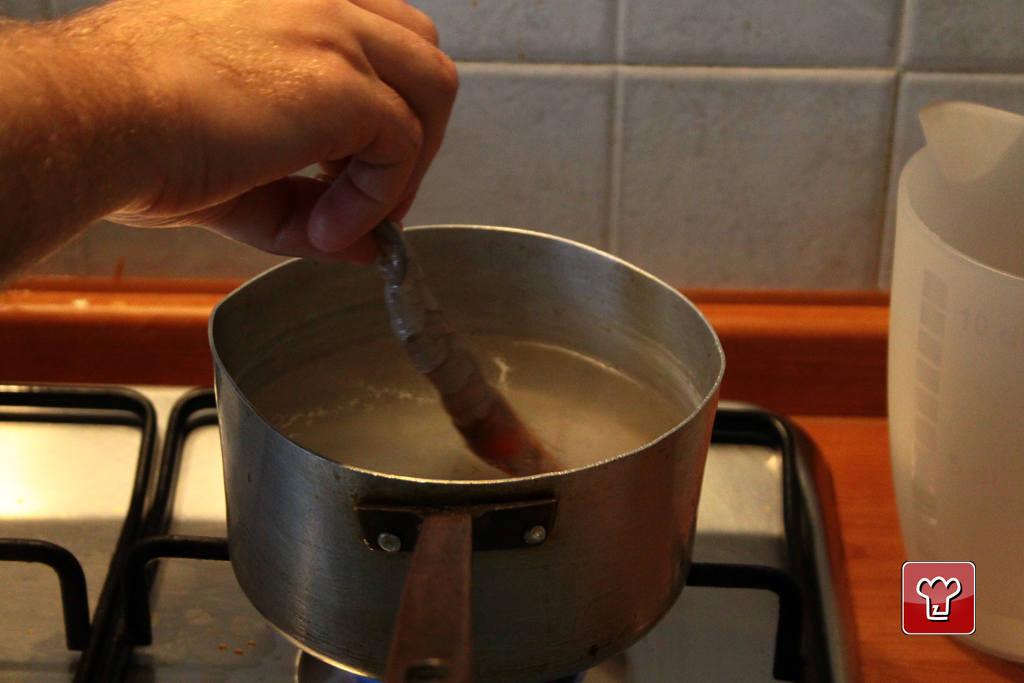
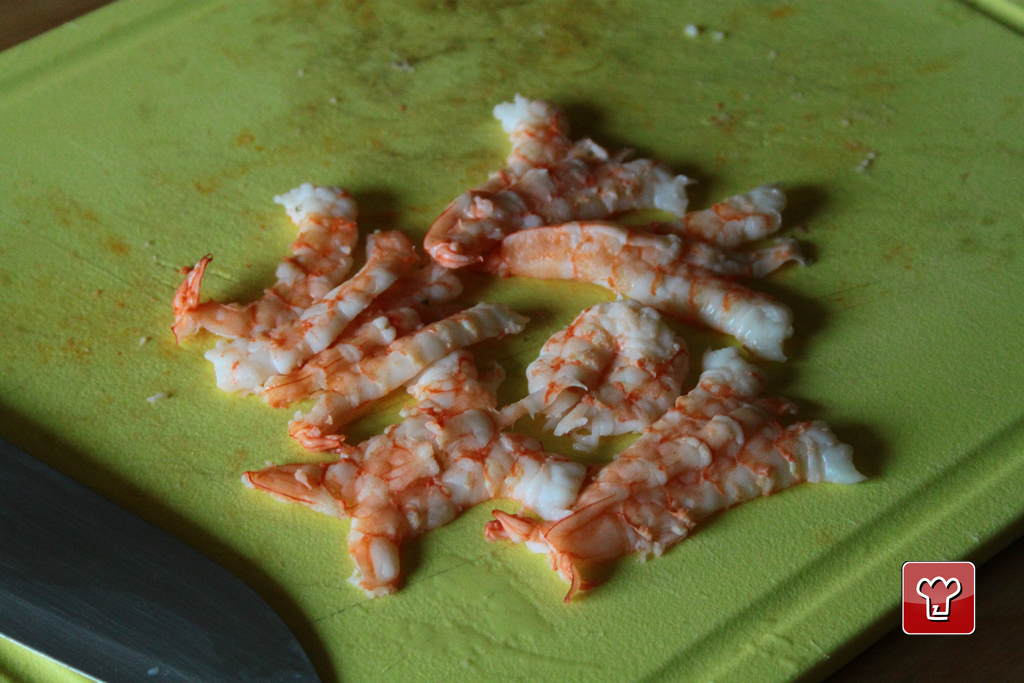
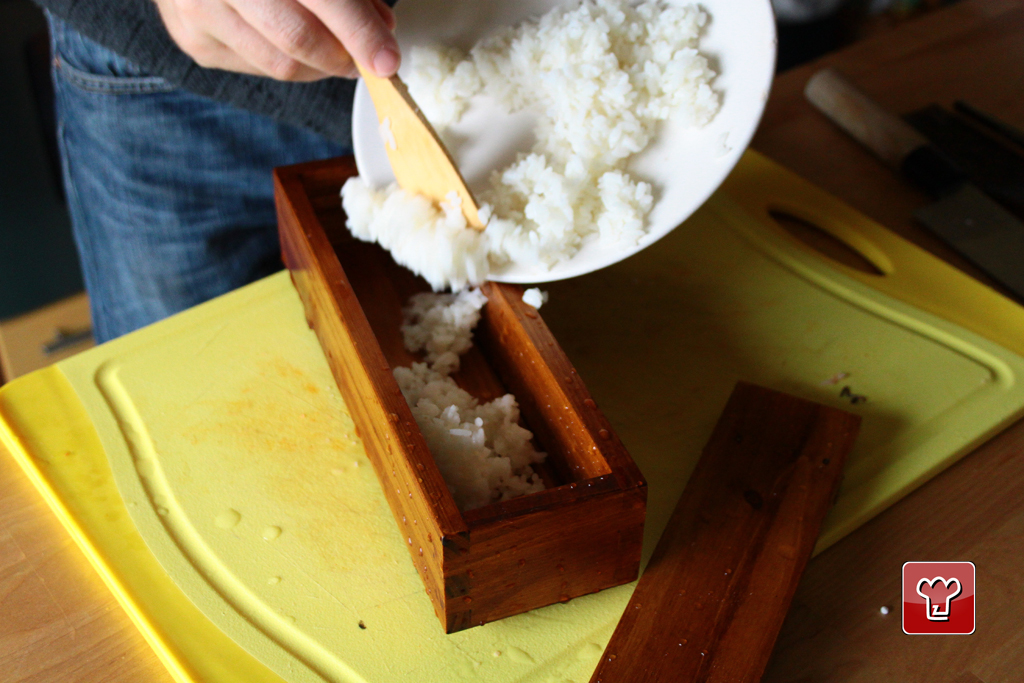
Prepare the rice for the sushi. We will make this particular type of sushi with two sets of ingredients: one with avocado and shitake mushroom; the other will be with Nori seaweed and cooked prawns. Peel the prawns and skewer with a toothpick so that they are straight. Boil some water and submerge them for less than a minute. Remove the heads of the prawns, remove the toothpicks, and cut them in half. Get yourself a sushi ‘box’ (oshi sushi) and fill it with half the portion of rice. Press down a little, then add a layer of seaweed cut to the size of the box. Add the remaining rice so that the two rice layers are 1 cm high. Press down lightly. Now place the prawn halves on the rice. Make sure that everything is very compact and does not protrude over the edge. Now press firmly for 30 seconds. Then remove the sides of the wooden box mould, and finally remove the top of the mould. Do much the same with the avocado and shitake mushrooms: fill the mould with same amount of rice as you used for the shrimp. Press lightly, then add the avocado slices, press some rice on top, then add eight slices of mushroom. Press firmly for a few seconds and then remove the mould. Serve cut into eight parts.
Step by step
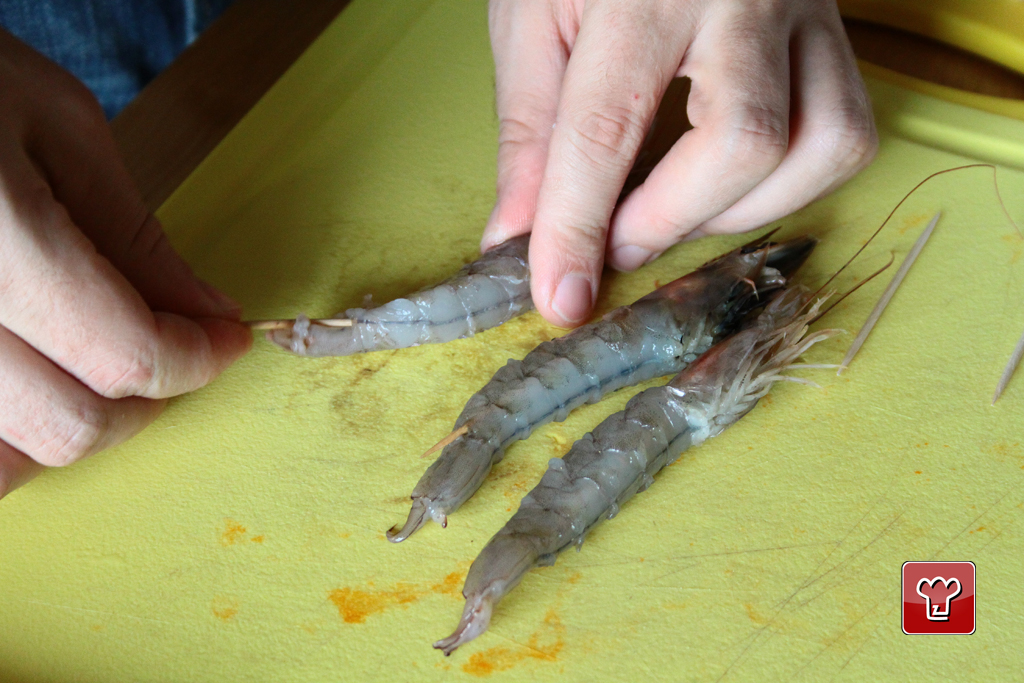
|
View the step by step
|
Boil the prawns in boiling water for half a minute
|
|
View the step by step
|
Cut the boiled prawns in half
|
|
View the step by step
|
Put a pre-prepared layer of rice in the bottom of an oshisushi box
|
|
View the step by step
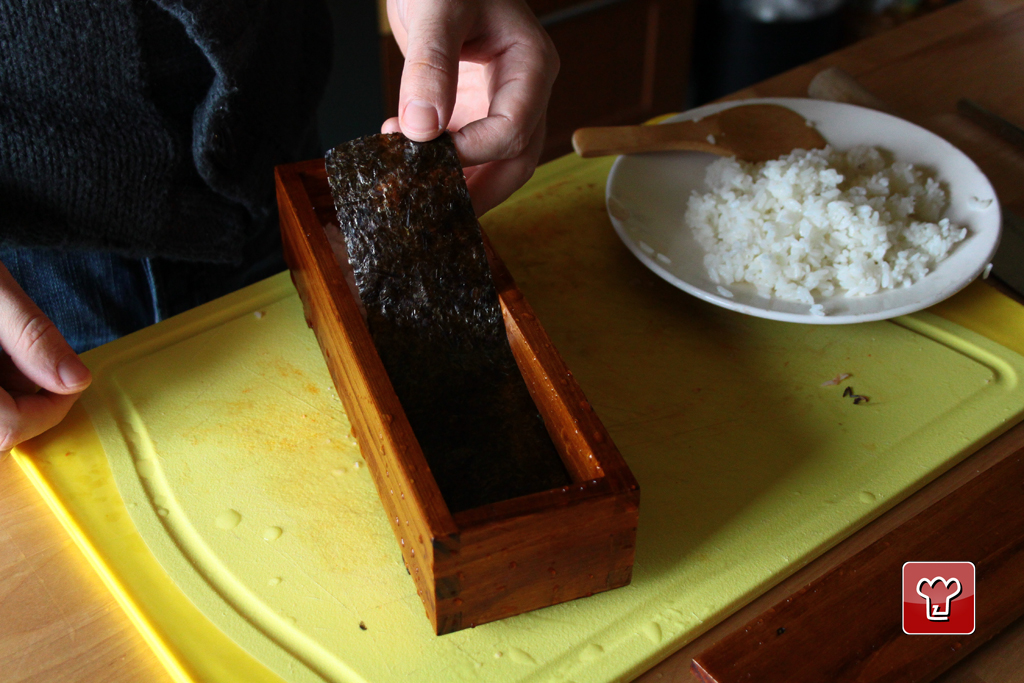
|
Cut a strip of seaweed to the right size for the box and place on the bed of rice
|
|
View the step by step
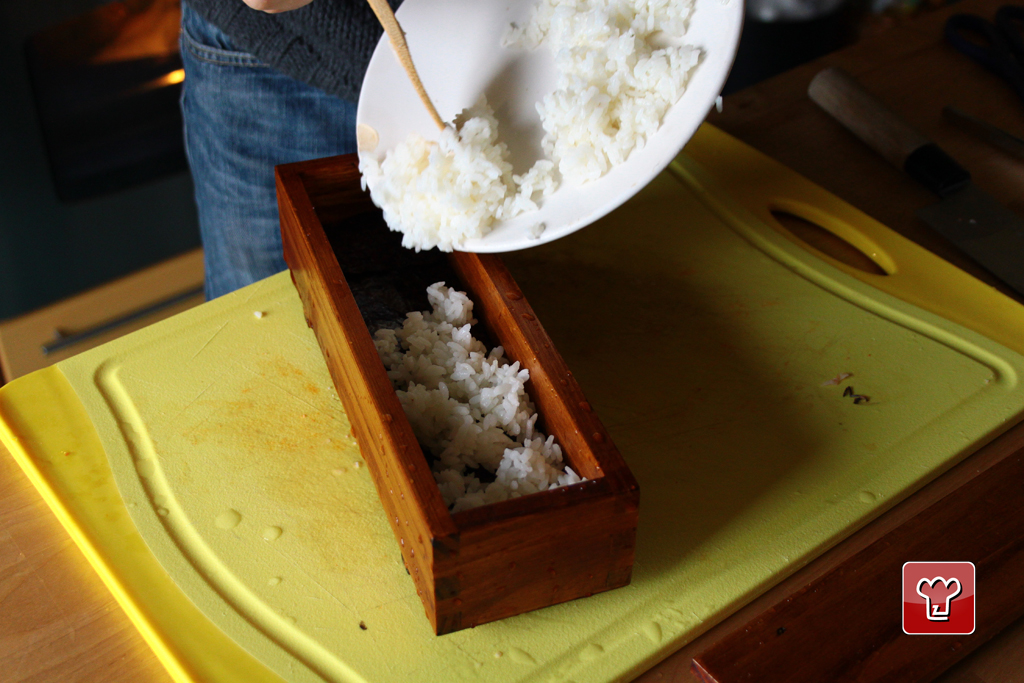
|
Put another layer of rice on the seaweed and lightly press down
|
|
View the step by step
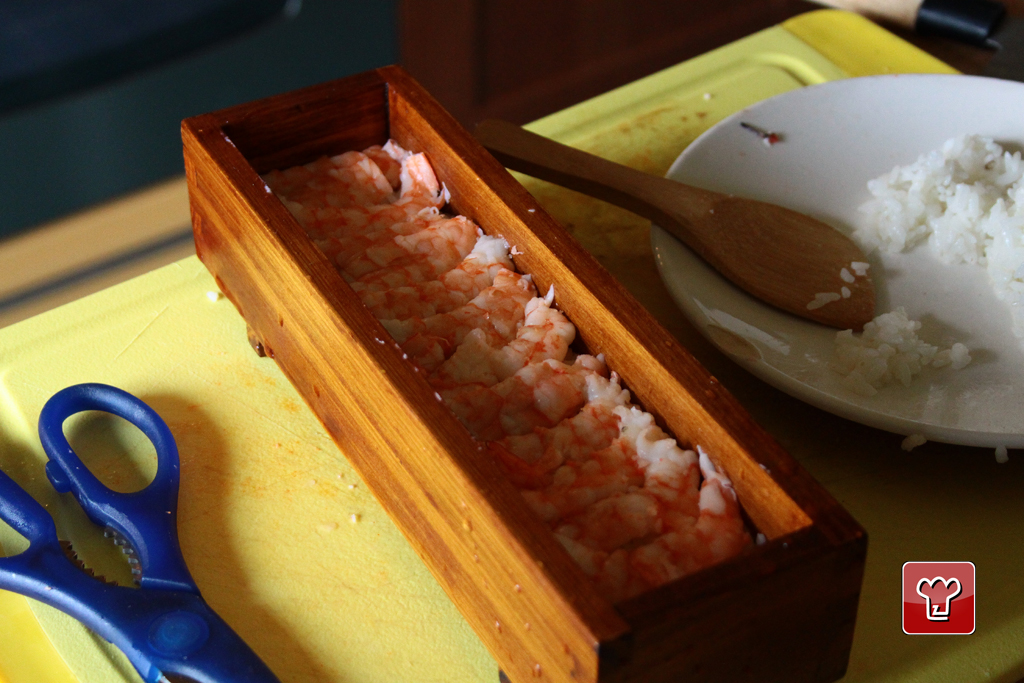
|
Arrange the prawns neatly on the pressed-down rice
|
|
View the step by step
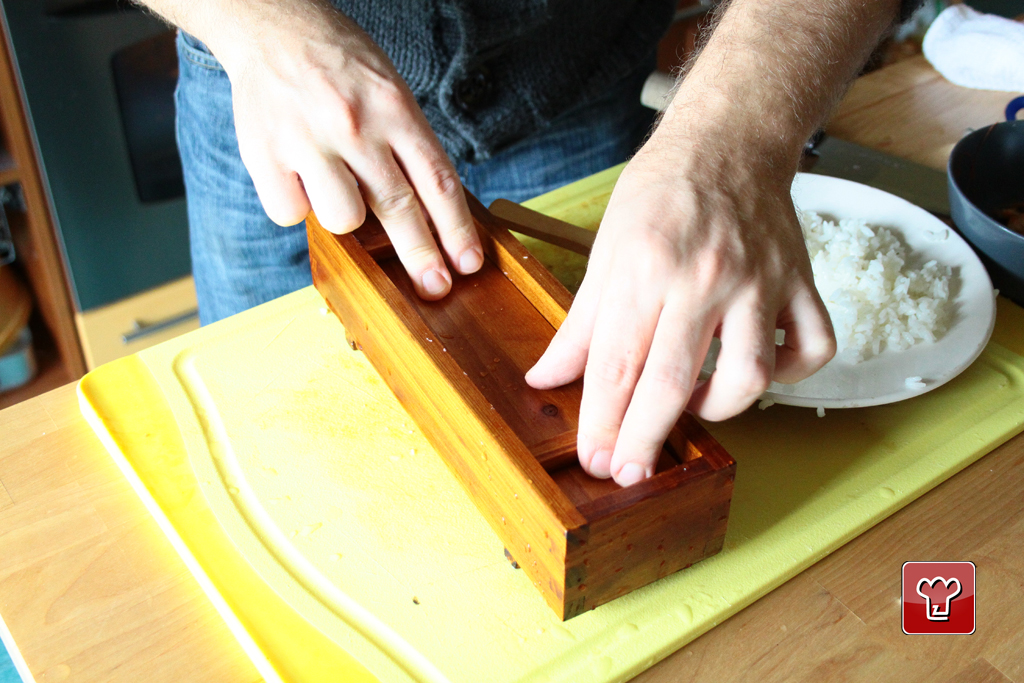
|
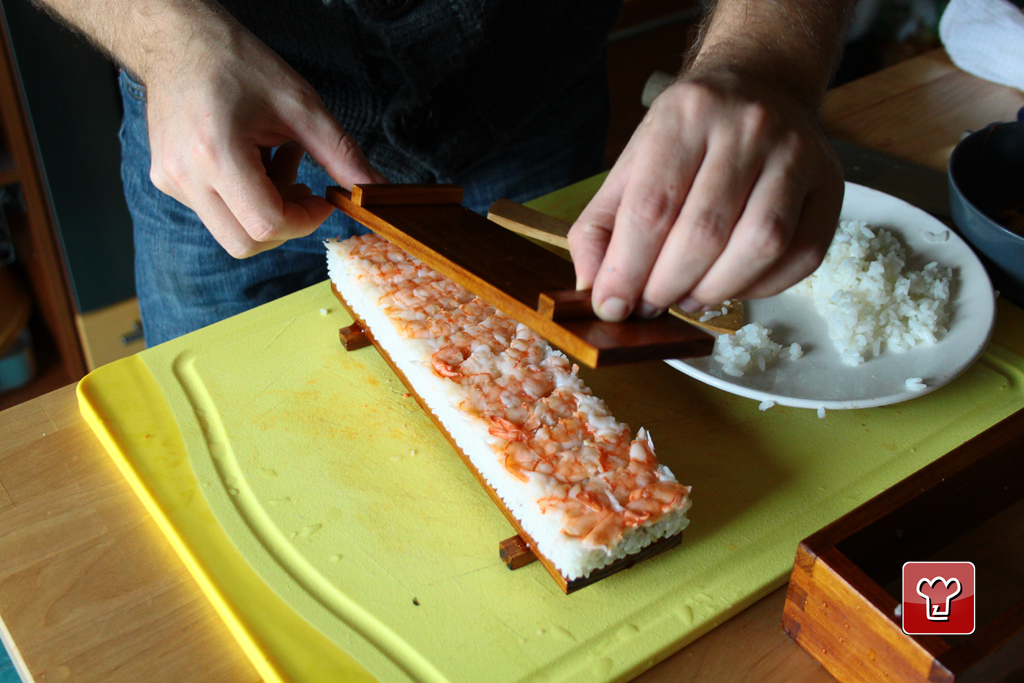
Press everything down firmly with the box press
|
|
View the step by step
|
Remove the sides and top of the mould carefully so as not to disfigure the sushi
|
|
View the step by step
|
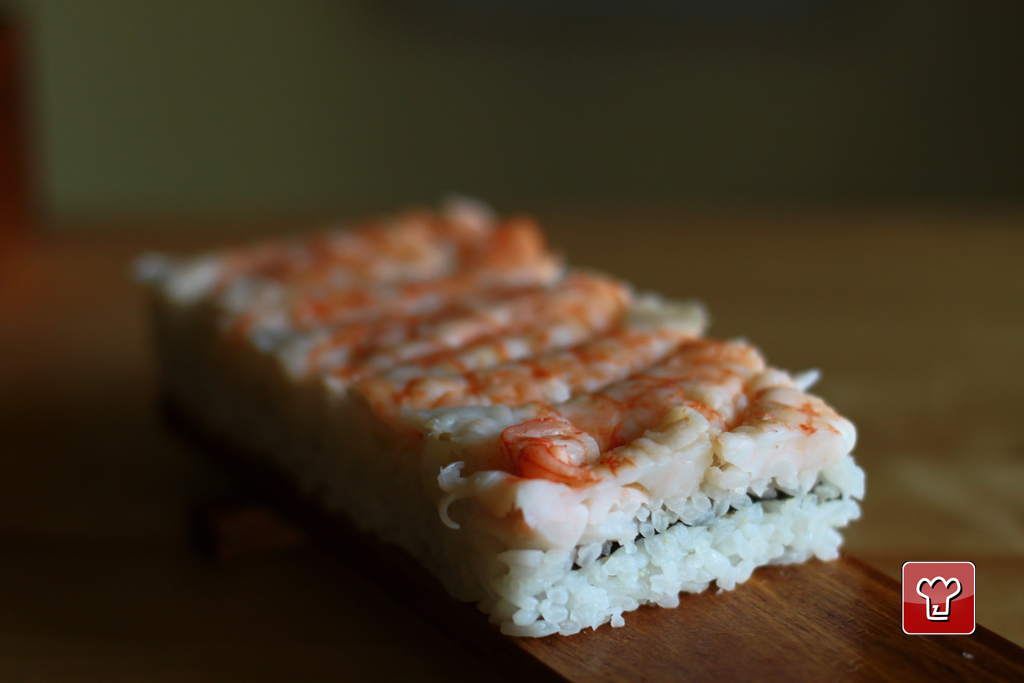
Here is one way of serving box sushi, the whole mould cut in half
|
|
View the step by step
|
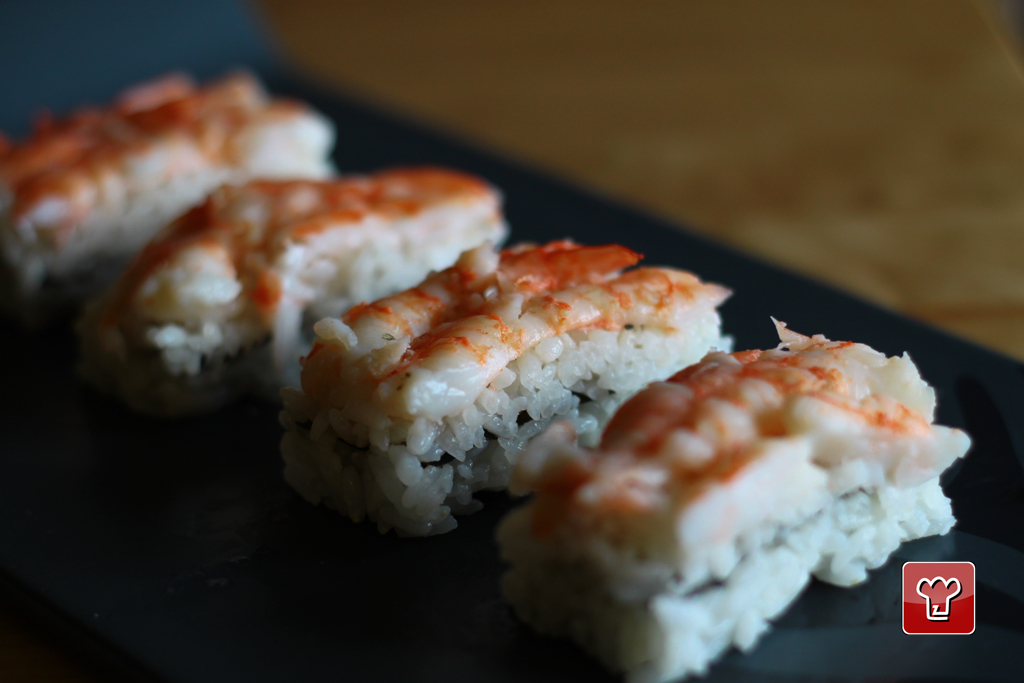
Here is another way of serving the sushi: the whole rectangle cut into 8 mini portions
|
|
View the step by step
|
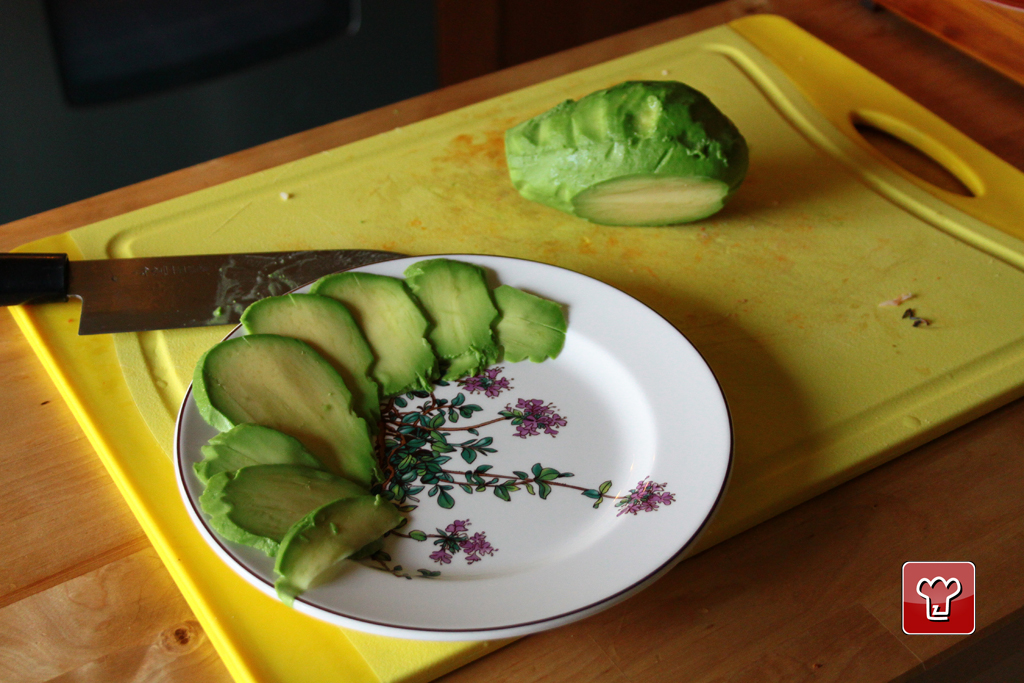
Cut the avocado into very thin slices that are then used to lay on the pressed down sushi rice
|
|
View the step by step
|
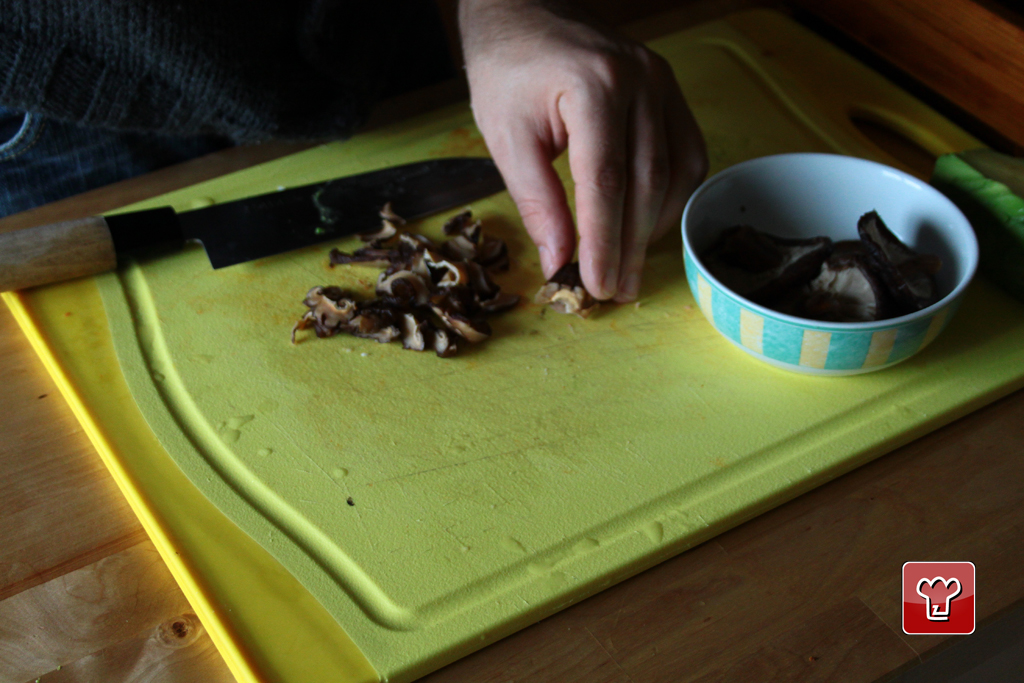
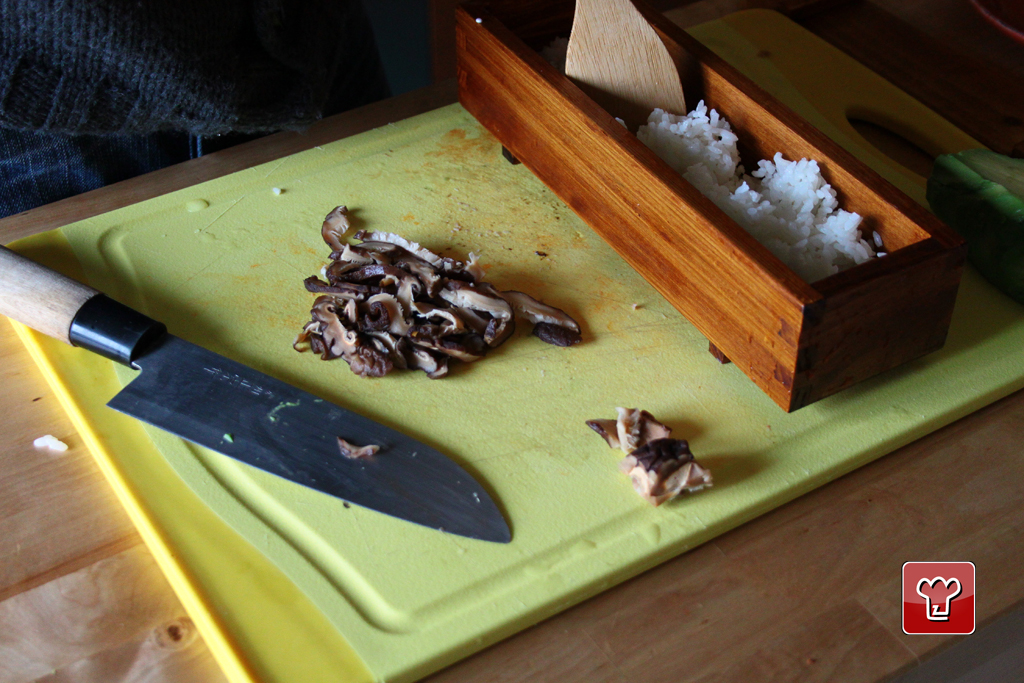
Cut the shitake mushroom into very thin slices to lay on the sushi
|
|
View the step by step
|
Make one finger height layer of rice lightly presses
|
|
View the step by step
|
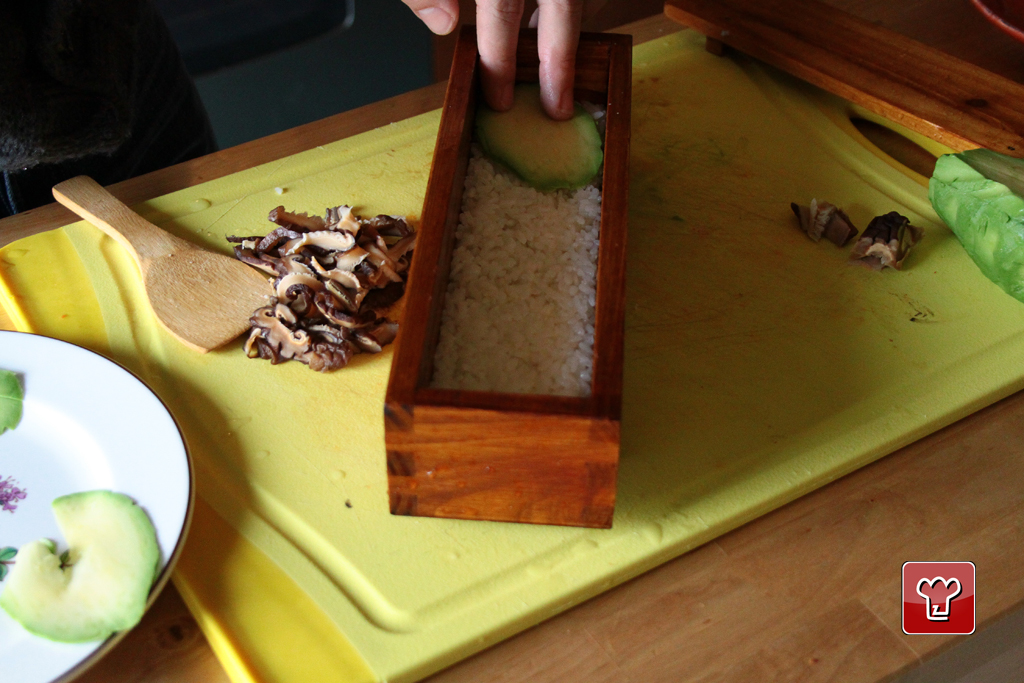
Arrange the avocado on the rice, positioned obliquely
|
|
View the step by step
|
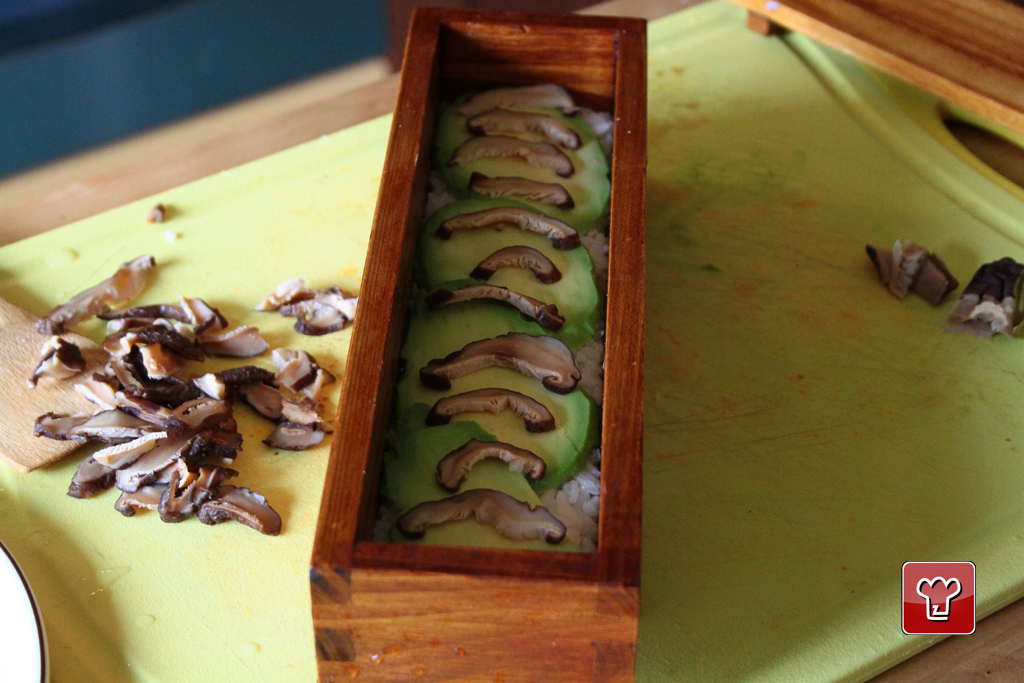
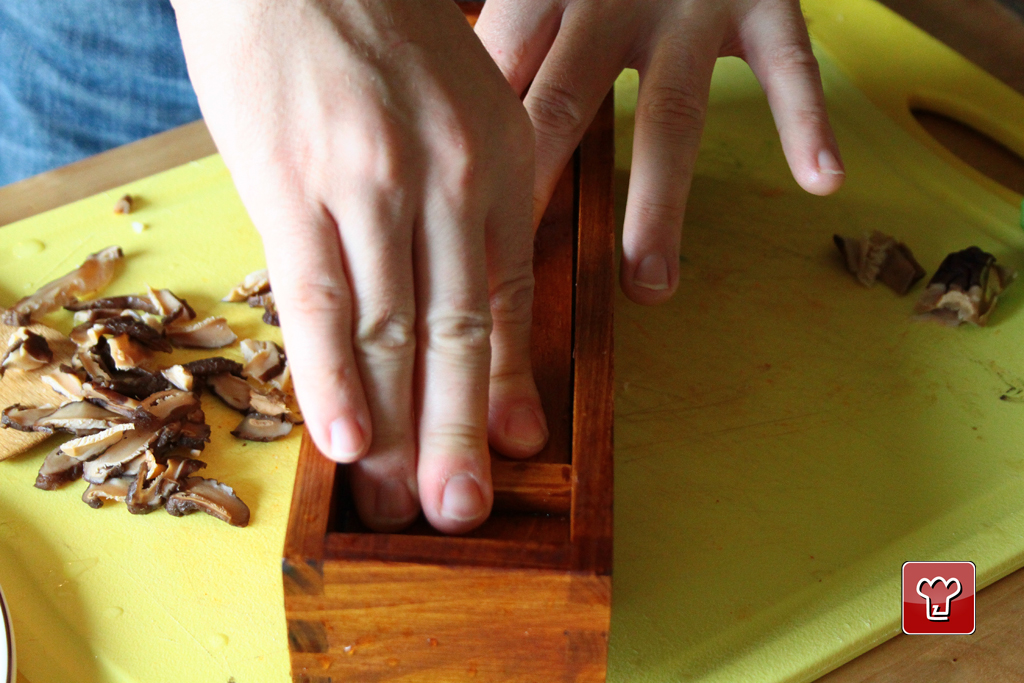
Position a slice of shitake mushroom for each portion of sushi
|
|
View the step by step
|
Press firmly down for 30 seconds with the mould lid
|
|
View the step by step
|
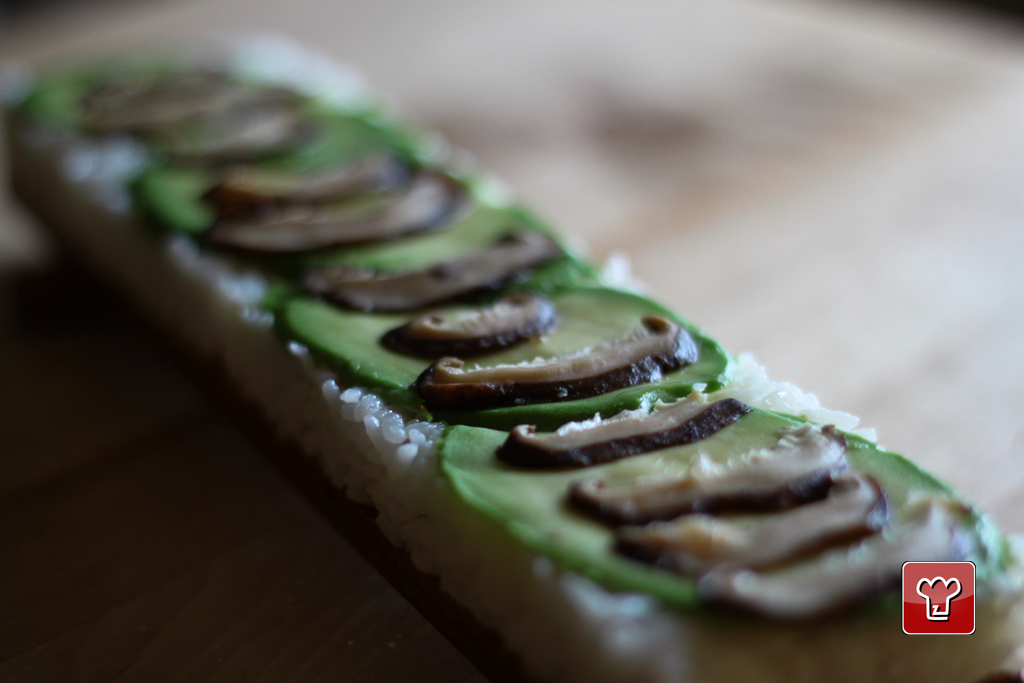
This is the result: a lovely fresh combination with an intense taste!
|
Additional information
Oshi zushi with avocado and shitake mushrooms
One of the most interesting variations of oshi zushi is certainly the one that includes avocado and shitake mushrooms. This preparation not only offers a delicate and creamy flavor but is also a vegetarian option that can satisfy those looking for lighter dishes. To make this variation, start by preparing the sushi rice following the basic recipe. Once ready, you can add diced avocado and sautéed shitake mushrooms to enrich your oshi zushi. Use a mold to compact the rice and ingredients, creating a dish that is not only beautiful to look at but also rich in flavors. This version is perfect for those who love contrasts in textures and flavors, combining the creaminess of avocado with the texture of mushrooms. Try it for a light lunch or an informal dinner!
Japanese-style oshi zushi with Nori seaweed and cooked shrimp
The preparation of Japanese-style oshi zushi is another variation that cannot be missing from your repertoire. In this version, Nori seaweed becomes the distinctive element, wrapping the rice and cooked shrimp in an embrace of authentic flavors. After preparing the sushi rice, proceed to cook the shrimp, which are deveined and halved. The Nori seaweed, cut into strips, is used to create a wrapper that encloses the rice and shrimp, making the dish even more flavorful. This variation is perfect for those who want a taste of Japanese tradition, with the freshness of the sea joining the delicacy of the rice. Serving Japanese-style oshi zushi allows you to appreciate not only the taste but also the presentation of this iconic dish.
Light oshi zushi with fresh ingredients
If you are looking for a lighter version of oshi zushi, you can opt for a preparation that uses fresh and healthy ingredients, keeping the rice as the main base. Replace the cooked shrimp with grilled vegetables, such as zucchini and bell peppers, and use avocado to add creaminess without weighing down the dish. This light variation is perfect for those following a balanced diet, as it reduces calories without compromising flavor. Additionally, the use of fresh vegetables provides vitamins and minerals, making your oshi zushi a dish that is not only tasty but also nutritious. Preparing oshi zushi in this version allows you to enjoy a healthy and colorful meal, ideal for a summer lunch or a light dinner with friends.
Nutritional benefits of oshi zushi: rice, avocado, and shrimp
Oshi zushi is a dish rich in nutritional benefits thanks to the fresh and quality ingredients. The rice, a fundamental base of the preparation, is a source of complex carbohydrates that provide energy. Avocado, used in some variations, is rich in monounsaturated fats, which are great for heart health, and also provides vitamins such as vitamin E and potassium. Shrimp, on the other hand, are a lean source of protein and contain important nutrients such as selenium and vitamin B12. On average, a serving of oshi zushi can contain about 250-300 calories, depending on the ingredients used. This dish is therefore a nutritious option for those seeking a balance between taste and health, perfect for a complete and satisfying meal.
Can oshi zushi be frozen?
One of the most common questions regarding oshi zushi is whether it can be frozen. In general, it is not recommended to freeze this type of sushi, as the texture of the rice and fresh ingredients like avocado and shrimp can deteriorate. The rice, once thawed, tends to become gummy and unappetizing, while the avocado can brown and lose its freshness. However, if you wish to prepare the rice in advance, you can freeze it separately and then assemble your oshi zushi at the time of consumption. This way, you can ensure the maximum freshness and quality of the dish. If you have leftovers of oshi zushi, it is better to store them in the refrigerator and consume them within 24 hours for the best taste.